Get Full Government Meeting Transcripts, Videos, & Alerts Forever!
Get email alerts on the Coroner Report topic
No spam. Unsubscribe anytime.
Seneca County coroner reports year of increased caseload, adopts electronic death records
Summary
Dr. Zachary West told commissioners Dec. 16 that Seneca County adopted an electronic death-record system in May, reported roughly 67 coroner cases and 44 autopsies to date, and plans to enroll in state overdose toxicology reimbursement programs.
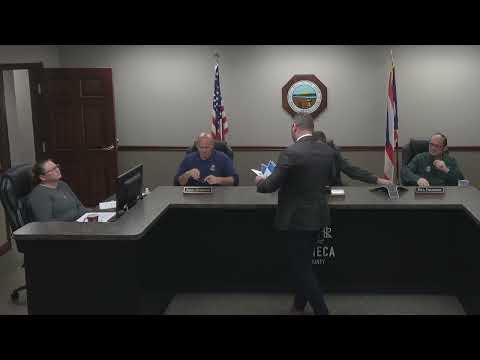
Dr. Zachary West, Seneca County coroner, gave a year-end update to the Board of Commissioners on Dec. 16, saying the office adopted an electronic death-record keeping system in May and backfilled records to the start of 2025 to improve case tracking and statistics. "We adopted an electronic death record keeping system," West said, describing a printout that breaks cases down by manner and preliminary cause.
West told commissioners the coroner's office handled 67 coroner cases (the count rose overnight) and recorded 74 notification reports for deaths reported but not taken under coroner jurisdiction; he said the office had completed 44 autopsies so far this year and had responded to 41 public-records requests. "We've had 44 autopsies to date," West said. He noted November was an especially busy month and that some cases are still pending toxicology or final autopsy results.
West described staffing gains and training: the office hired two investigators, Amy Dickman and Steven Harrison, who completed basic and advanced medical-legal death-investigation courses at the Cuyahoga County Medical Examiner's Office and were able to apply training during a recent multi-scene street incident. He said the office will continue efforts to improve scene-to-office information sharing with emergency medical services to capture time-of-death data that currently can be difficult to obtain after EMS leaves a scene.
On data access, West said a change in law in 2023 opened the Ohio Law Enforcement Gateway (OLEAG) to coroners who apply for direct access. "Ultimately, we'll be able to have the same access that law enforcement does," West said, adding he is in the process of applying so the office can verify names, dates of birth and other identity details without relying on inconsistent law-enforcement sharing.
West also told the board the coroner's office is pursuing enrollment in overdose-toxicology reimbursement funding run by the Ohio Department of Health; the grant provides partial reimbursement for toxicology costs and the county will reapply for future cycles. When asked what percentage the grant covers, West said he did not have the number available and would need to review the data. The presentation closed with several technical clarifications from commissioners on causes of death and expected next steps for equipment, communications and EMS coordination.