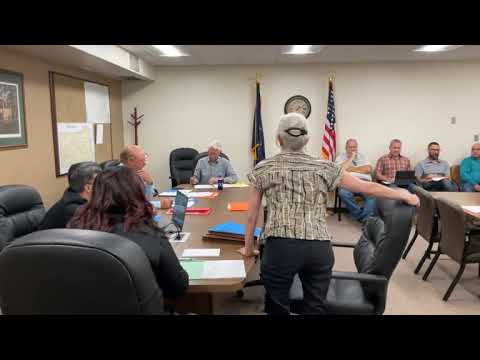
Oliver County approves BNI overpass design amid landowner easement dispute
Loading...
Summary
The county commission approved engineering plans and a development agreement allowing BNI to build an overpass and temporary equipment bypass, after lengthy public debate over whether company coal leases suffice or whether formal easements must be secured for relocated county roads.
The Oliver County Board of Commissioners voted to approve construction plans and a development agreement for a new BNI overpass and associated temporary equipment bypass after hearing extensive public comment and technical testimony.
The permit request, presented by BNI engineers and company representatives, asked the commission to permit work “within 100 feet of the right of way” and to accept proposed construction and maintenance provisions. Mike Hager, president of BNI Coal, told the board the project has been under engineering and public review since October 2024 and said the company had responded to community concerns by lowering the clearance and making the equipment bypass temporary.
Opposition centered on whether BNI’s existing coal leases give the company authority to relocate public county roads without separate easements. Landowner Brian Russell submitted a letter and historical easements showing prior instances where BNI sought easements for road relocations; Russell urged the commission to require easements for this project to protect private surface owners and to avoid future legal disputes.
BNI’s Mike Hager replied that the company’s legal counsel reviewed the leases and advised the county the leases provide the necessary rights for the requested work. He said that, to date, landowners specifically affected by the bypass had not objected and that BNI was prepared to negotiate if concerns arose.
Commissioners pressed both sides on technical details: snow removal for a bypass expected to remain in place for 12–15 months, the required class of gravel for temporary roads, and a maintenance-reserve fund the company proposed to establish (the draft motion capped the reserve at no more than 3% of estimated construction cost, with the specific dollar amount to be set after bidding). County legal counsel advised that whether an easement is legally required depends on the exact lease language for the affected parcels.
After clarifying language in the petition—removing a reference to approving a not-yet-final road-use agreement—the commission moved, seconded and approved the construction plans and the development agreement as amended. The motion passed on a roll-call/voice vote. Commissioners said they expect continued negotiation between BNI and potentially impacted landowners and reserved the right to revisit specific contract terms once final contractor bids and a road-use agreement are available.
Next steps: BNI will finalize contractor selection and the county will receive the finalized maintenance and road-use terms for review. Commissioners also asked staff to make a record of historical easements and to continue outreach to any landowners who say they may be affected.