
District attorney to pilot restorative-justice track inside DA diversion program
Get AI-powered insights, summaries, and transcripts
Subscribe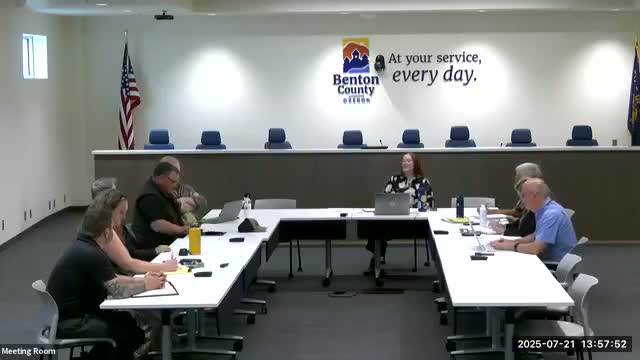
Summary
Benton County's district attorney said the office will pilot a restorative-justice protocol within the existing DA diversion program, using an MOU with Neighbor to Neighbor and aiming for a small-scale rollout in a month or two; two new attorneys will join the office.
District Attorney Bridal Johnson told commissioners the DA’s office will try a restorative-justice protocol as part of its existing DA diversion program.
Johnson said the office recently signed a memorandum of understanding with Neighbor to Neighbor to run a mediated restorative process — described as a facilitated meeting between the harmed person, the responsible party and a community representative — with terms to last the length of diversion (generally six to nine months). If the participant successfully completes the program, the case will be dismissed; failure to complete the program would return the case to the normal prosecution path.
Johnson said two new deputy district attorneys are joining the office (one with roughly five years’ experience, one new to prosecution), and she expects a phased, small-scale rollout of restorative-justice within existing diversion options after internal preparations.
She also described administrative changes to subpoena handling — preparing subpoenas at the DA’s office but turning service back to law enforcement to reduce delays — and gave an update on the Axon body-camera program, saying revenue from discovery fees appears comparable to the prior system, though she noted possible future legislative changes could affect that funding source.
Commissioners did not take formal action; Johnson said program partners will discuss details with the criminal-justice council and that Neighbor to Neighbor representatives are scheduled to brief stakeholders the following day.