Get Full Government Meeting Transcripts, Videos, & Alerts Forever!
Get email alerts on the Liquor License Zoning topic
No spam. Unsubscribe anytime.
Lancaster County recommends denial of winery's Class I liquor license over zoning noncompliance
Summary
After a public hearing, county planning and legal staff told commissioners the winery's Class I application does not conform with local zoning in the city's three-mile jurisdiction; the board voted to recommend denial to the Nebraska Liquor Commission while advising the applicant to pursue a city text amendment.
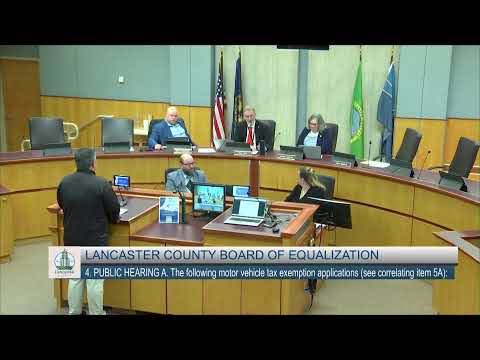
The Lancaster County Board of Commissioners on Dec. 2 recommended denial of a state Class I liquor license application for a winery located in the city's three-mile zoning jurisdiction, saying the application does not comply with applicable local zoning standards.
Planning staff told the board the county's municipal-code provisions for farm wineries allow on-site alcohol consumption only when the wine is produced on the property. "It only allows for on-site consumption if the wine is produced on-site," said Ben Callahan, Planning and Development Services. County legal staff said the site sits outside the city's corporate limits but within the city's three-mile zoning area, creating a jurisdictional mismatch for the board's recommendation to the Nebraska Liquor Commission. "The governing body within the limits of a city municipality ... will make recommendations to the liquor commission," said John Ward of the Lancaster County Attorney's Office, explaining why the county must report nonconformity with city zoning.
Applicant Lorenzo Ball, who said he represents the business applying for the license, told the board the vineyard intends to keep wine as the primary beverage and sought flexibility to offer additional options at events: "The wine will be the primary beverage at Capital View Winery," Ball said, describing plans to sell wine at onsite events while seeking a path forward with planning staff.
Commissioners and staff agreed the discrepancy is rooted in a difference between zoning authority and the Liquor Commission's interpretation. Staff and the board urged the applicant to pursue a city text amendment to align local rules with the operation the applicant seeks. A commissioner moved that the board recommend denial to the state Liquor Commission because the application does not comply with all local regulations; another commissioner seconded the motion and the motion carried by roll call.
The board instructed staff to include in the recommendation letter that the application is not in compliance with the city's liquor/zoning standards and noted the county is open to assisting with a text amendment review if the City Council and planning commission take action. No final action on a state license occurs at the county level; the county's role is advisory to the Nebraska Liquor Commission. The applicant was told a new application may be submitted after any required local code changes are complete.