
Benton County juvenile services reports staffing pressures, shifts toward prevention and school outreach
Get AI-powered insights, summaries, and transcripts
Subscribe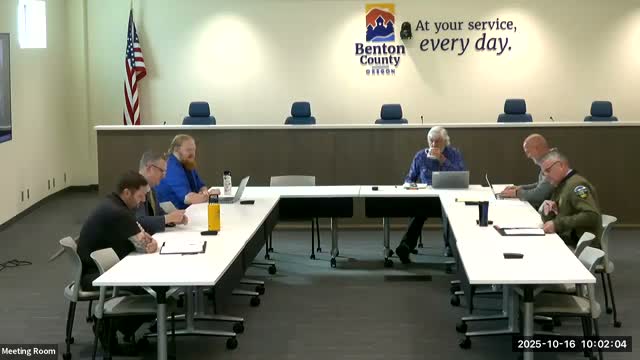
Summary
At the Oct. 16 meeting juvenile services said it has 14 FTEs and 12 full-time staff, is covering roughly a 20% vacancy factor in local budgeting, and is prioritizing prevention, school-based groups and work-crew expansion while exploring billing opportunities for mental-health services.
The juvenile services presenter told the Benton County Board of Commissioners on Oct. 16 that the department currently "has 14 FTEs and 12 full time staff," and described ongoing discussions about a potential organizational restructure to better meet community needs.
County staff framed the staffing update against a tighter county budget, saying juvenile services was already covering roughly 20% of a vacancy factor and urging prudent spending. The county'level expenditure trend was reported as about 6.8% versus an expected 8.3% at this point in the biennium.
On caseloads the presenter said the department had 64 Benton County youth on supervision, four on courtesy supervision from other counties and seven Benton County youth in OIA custody. The office reported 94 law-enforcement referrals in the last quarter and cautioned that referrals often rise with the school year, even when statewide referral trends are down. The presenter said complex, multi-system cases are increasing even if overall case counts have declined.
Programming updates focused on prevention and outreach. The presenter said school-based groups are ramping up—"2 or 3 starting and then several more that are gonna be happening in the next month or 2"—with a particular emphasis on expanding services to rural areas such as Monroe and LC. Staff said they intentionally avoid presenting as court-affiliated when working in schools.
The department highlighted its work-crew program as a hands-on prevention and skills initiative. The presenter reported 13 crew days in the last quarter involving 15 youth and 238 crew hours; as of January this year there had already been 595 hours completed and staff anticipate about 714 total hours for 2025, contingent on caseloads. Dan, the work-crew coordinator, was identified as having led the effort for about 2.5 years. The presenter said work crews also supported county events, noting work that prepared the fairgrounds saved the county about $8,000.
Mental-health services received additional emphasis. The juvenile services presenter said the department'embedded QMHP is working with about 8'10 youths (generally meeting about once a week) and "is very, very timely on getting families in." County staff added there may be opportunities to bill for QMHP services or co-partner with the health department to expand treatment access and that they would report back with more specifics.
Next steps identified to the board include a timeline for a structural assessment—the county'level speaker said they wanted a clearer direction by the end of the year—and continued work on prevention staffing (including a proposed navigator role) and on pursuing funding and billing avenues for mental-health work.