Get Full Government Meeting Transcripts, Videos, & Alerts Forever!
Get email alerts on the Land Use Zoning topic
No spam. Unsubscribe anytime.
Greenville County committee pauses proposed car‑wash standards ordinance after legal, zoning and enforcement concerns
Summary
The Roads Infrastructure and Public Works Committee discussed a proposed car‑wash facility standards ordinance, raised questions about applying requirements to existing businesses, mitigation methods, and penalty levels, heard a nearby resident plead for stronger protections, and voted to hold the item for staff revisions to return in January.
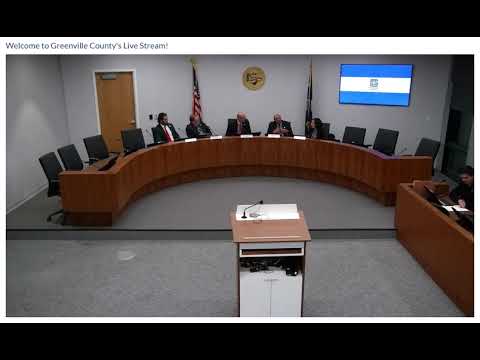
The Roads Infrastructure and Public Works Committee on Dec. 2 discussed a proposed car‑wash facility standards ordinance but voted to hold the measure while staff rewrites sections on enforcement, definitions and mitigation for existing businesses.
Committee members and county staff raised legal questions about whether changes that would alter a building’s footprint could constitute a regulatory taking, and asked that the draft spell out acceptable mitigation measures and compliance timelines. One county staff speaker warned that forcing a building to move or significantly alter its footprint "could be a regulatory taking" and recommended clearer language on setbacks, variance procedures and phased compliance.
Councilor Bradley asked whether the county could require long‑standing car washes to comply with new rules, including whether the county could "go back and make them put up a soundproof fence." Staff told members the ordinance should focus on measurable compliance standards while allowing defined mitigation methods and reasonable grace periods so existing businesses are not unduly burdened.
Members debated enforcement approaches. The draft's requirement for periodic sound testing (a 365‑day submission) was questioned as potentially onerous; the chair suggested relying on complaint‑driven enforcement where appropriate and asked staff to review whether a permit trigger for physical modifications would be preferable to mandatory annual testing.
Zoning staff and committee members said changes to the zoning code will likely be required for stronger enforcement — for example, prohibiting certain uses adjacent to residential zones or creating buffer rules — because zoning carries more direct ticketing authority than an overlay ordinance. The committee asked staff to draft suggested zoning and ticketing language.
A resident who lives near a car wash urged stronger protections during the public‑comment period, saying vegetation does not reliably reduce noise and that "quality of life for those 13 homes is worth the fight." The committee noted a planned meeting with the business owner to discuss site‑specific mitigation.
Councilor Collins moved that the committee hold the item for staff to return with revisions; members voted in favor. The committee directed staff to refine definitions (including "fence structure" and "vegetative buffer"), clarify how existing facilities will be required to comply (for example, whether a permit for modifications will trigger compliance), consider alternatives to an annual testing requirement, and recommend penalty levels and a compliance timeline. Staff asked for two weeks to draft suggested language; the committee agreed the ordinance would be revisited at the first January meeting.
The meeting adjourned after the hold motion passed.