Get Full Government Meeting Transcripts, Videos, & Alerts Forever!
Get email alerts on the Building Code topic
No spam. Unsubscribe anytime.
Shelby County committees advance building-code changes to make school storm shelters optional and create an alternative path for middle-scale housing
Summary
First readings in Shelby County would align local code with Tennessee’s 2021 International Building Code change to make storm shelters for educational buildings optional, and add an Appendix M to allow alternate compliance for 3–24 unit 'middle-scale' housing aiming to reduce construction costs.
Shelby County’s Land Use committee advanced first readings of three related ordinances that would update the county’s building and fire prevention codes.
Rita Anderson, building official with the Shelby County Division of Planning and Development, told the committee the proposals include making storm shelters optional for educational buildings and adding an Appendix M that provides an alternative compliance path for "middle-scale" low-rise multifamily buildings of roughly 3 to 24 units. "This proposal aligns with the state guidelines adopted by the state of Tennessee in April 2021," Anderson said, and the county’s advisory board supported the recommended language.
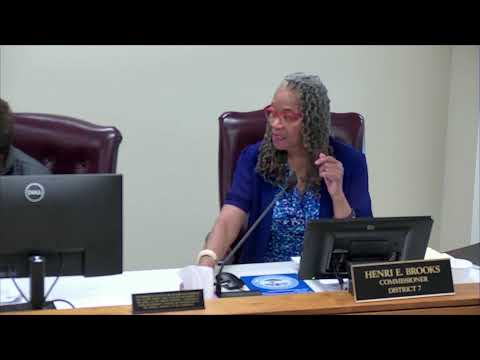
Commissioners probed cost and implementation details. Commissioner Brooks asked whether the change simply mirrors state action and whether the prior city-level moratorium stemmed from cost concerns. Anderson and John Zena, chief of development and infrastructure for the City of Memphis, explained the moratorium and noted the state’s adoption of the 2021 International Building Code omitted the mandatory school-shelter requirement. Zena described the middle-scale appendix as optional and estimated that, for structures between 3 and 8 units, a developer could see roughly 8–10% construction-cost savings by using the alternate compliance path.
Committee members took the first readings and forwarded the ordinances with favorable recommendation to additional readings; votes were recorded with several commissioners abstaining on first readings. The measures will return for a second reading where commissioners and staff said they will continue to examine cost impacts, enforcement language and how the optional storm-shelter provision will be applied in practice.
Why it matters: the changes alter local life-safety and construction-rule choices that affect school-design decisions and the cost-to-build of small multifamily housing—two areas with direct budget and public-safety implications.
What’s next: the ordinances proceed through two more readings and will include additional staff and stakeholder briefings on cost estimates, enforcement practice, and potential fiscal impacts.