Get Full Government Meeting Transcripts, Videos, & Alerts Forever!
Get email alerts on the Public Comment Quarry topic
No spam. Unsubscribe anytime.
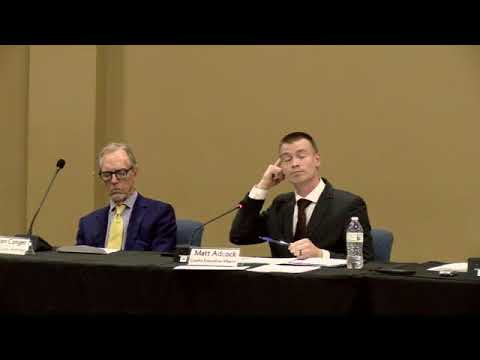
Residents press DeKalb County commissioners on quarry dust, code enforcement and road safety during public comments
Summary
Public commenters raised health concerns about silica/fugitive dust from SRM Quarry and urged enforcement, questioned building‑inspection pay incentives and sought better road safety measures on Highway 70; commissioners recorded the complaints and said follow-up would be pursued.
Residents used the public‑comment period to press the DeKalb County Commission for action on three main issues: fugitive dust from SRM Quarry, county code‑inspection procedures, and vehicle safety on Highway 70.
Lucas Antoniak (District 2) described recurring clouds of silica/fugitive dust from SRM Quarry and said the dust ‘‘directly impact[s] the lives of DeKalb County residents’’ in nearby neighborhoods (Downtown, Dry Creek, Snow's Hill, Dale Ridge). Antoniak told commissioners he believes the quarry is operating in violation of Tennessee's fugitive dust law and asked why the county — and Mayor Adcock specifically — had allowed the quarry to be grandfathered. Antoniak urged commissioners to take enforcement action and asked for courage from any commissioner willing to pursue the issue.
Antoniak asked commissioners to consider public‑health consequences for people who live near the quarry and flagged respiratory and long‑term illnesses associated with silica exposure. His remarks were the most vocal public complaint of the night and drew references from multiple commissioners to the need to review the legal and enforcement pathway.
Nicole Williams (resident) raised questions about how the county implements building codes. Williams said she spoke previously with the rules committee and requested that commissioners consider paying the county building inspector a fixed salary rather than compensating by permit fees, arguing the latter could create "a false incentive" to require more permits. She also urged an automatic‑approval pathway when a product or material meets the code intent (for example, when a new material has a demonstrated two‑hour UL fire rating backed by engineering documentation) to avoid unnecessary appeals and the extra cost to applicants.
Steve Cantrell (District 5) thanked officials for Veterans Day recognitions and described concerns about damaged or missing flags at county locations. He also raised a public‑safety issue on Highway 70 at Snow's Hill where, he said, loaded gravel trucks and semis pose a hazard to two‑way travel and school buses; he said he contacted TDOT and that TDOT planned to evaluate the site.
What commissioners said: Commissioners acknowledged the public comments. Some noted that the state already operates a registered‑offender notification option (relevant to a separate agenda item) and that Tennessee law includes a basic speed rule (Tenn. Code Ann. §55‑8‑152) requiring drivers to adjust to conditions; others asked staff and the sheriff to look into operational and legal steps for enforcement or mitigation. No enforcement action against SRM Quarry was recorded in the transcript; commissioners asked for staff follow up on several issues.
Next steps: The commission did not adopt an immediate enforcement action on quarry dust during the meeting; Lucas Antoniak’s complaint was entered into the record and commissioners signaled they would review legal and regulatory options. On code‑inspection questions, the commission later approved a building‑inspector policy with conflict‑of‑interest language (separate agenda action) and can take further steps when staff report back.