Get Full Government Meeting Transcripts, Videos, & Alerts Forever!
Get email alerts on the County Budget topic
No spam. Unsubscribe anytime.
Trinity County workshop debates cutting overtime as staff recommend restoring prior dispatch mix
Summary
At a Trinity County FY2026 budget workshop, officials debated returning dispatch staffing to '1 administrator, 6 full‑time, 5 part‑time' while one participant said there would be 'no overtime' in their office — a stance staff warned could force 9‑1‑1 calls to another county or temporary jail closures. Staff said updated figures would be provided before the next meeting.
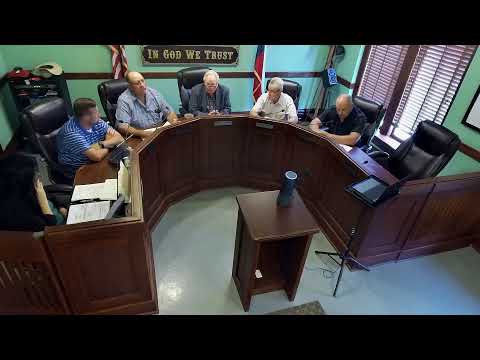
Trinity County officials met in a budget workshop to review proposed revisions to the FY2026 draft budget, focusing discussion on dispatch staffing levels, overtime policy and rising insurance costs. Speaker 1 opened the session and recapped prior reviews; staff and commissioners then debated whether to restore a previous staffing plan for dispatch and how to control overtime costs.
The staffing recommendation repeatedly cited in the meeting was '1 administrator, 6 full time, and 5 part time.' Speaker 3 asked for confirmation of that recommendation and Speaker 1 confirmed it was his recommendation after reviewing the figures with staff. Speaker 1 framed the revisions as an attempt to limit routine overtime while preserving pay for declared emergencies.
Speaker 5 told the group, 'There will be no overtime in my office,' and described operational consequences if overtime were eliminated or curtailed without offsetting staff: 'we're shutting the 9‑1‑1 operator down,' redirecting calls to another county, sending staff home, or moving inmates out of county and closing the jail overnight when coverage could not be secured. Speaker 5 cited training requirements, current short staffing and lengthy inmate transports as drivers of existing overtime levels.
Speaker 1 responded that the group had agreed overtime would continue to be available for disasters or emergencies, and said the aim of proposed changes was closer monitoring rather than a blanket ban: 'if we had a tornado or ... flooding ... if we had to run overtime to help the people, I wouldn't have no problem with that.'
Staff and participants also discussed personnel pay and benefits. The transcript records that elected officials received a 1.5% change while other employees received increases; participants noted insurance costs had gone up significantly, described in the meeting as 'almost $100 a person this year.' Participants asked staff to reinsert updated figures into the budget documents and to have those numbers ready before the next morning.
Budget staff recited line‑item numbers during the session, referencing removal of smaller amounts (for example, $37.04 and $54.88 removed from a $404,002.27 line) and referencing a reserve figure shown in the meeting as $1,204,002.27. Staff and commissioners confirmed several of those figures aloud while checking the totals.
Participants also raised operational constraints that influence staffing needs: training a new dispatcher requires two people on duty, and transporting female inmates to a facility named in the transcript as 'Boston County' was described as a 7‑hour round trip, creating additional staffing and overtime pressure.
The meeting closed with Speaker 1 requesting a motion to adjourn; Speaker 5 moved to adjourn. The transcript ends before a recorded second or vote on that motion. Staff indicated they would prepare updated budget figures before the next meeting or the stated 'tomorrow morning' deadline.
What happens next: staff will provide updated budget figures for review and the county will revisit the staffing and overtime proposals at the next convening or as needed to accommodate emergency coverage.