Get Full Government Meeting Transcripts, Videos, & Alerts Forever!
Get email alerts on the Dss Staffing Operations topic
No spam. Unsubscribe anytime.
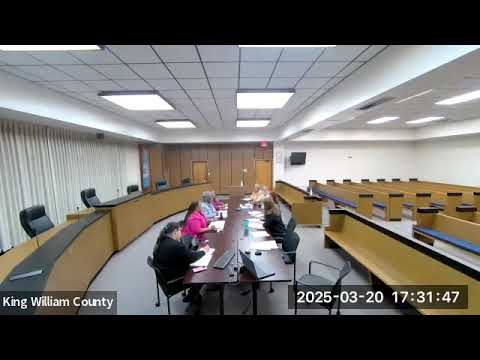
King William County advisory board hears of deep DSS staffing shortages, backlog and restored foster-care funding
Summary
County social-services leaders told the advisory board that a small team is processing hundreds of cases, Energy Share holds $4,535.69, and three foster children recently regained state funding after late assessments; members discussed hiring, telework and a draft letter to state officials.
King William County social-services staff told the county advisory board on March 7 that the department is struggling with severe staffing shortages, a growing backlog of cases and operational errors that have cost local funds, and that urgent operational fixes and outside assistance are needed.
The director (S1) told members that three children who had temporarily fallen out of state eligibility because required VMAT assessments were not timely reviewed are now back in compliance after those assessments were completed; "I am very committed to getting this place fixed," the director said. The director also reported an interlocal memorandum of understanding with neighboring Caroline County to provide supervision support and said interviews for multiple positions are scheduled with state HR assistance.
A benefits-unit presenter (S3) told the board that applications to the unit have increased and that the local Energy Share balance stands at $4,535.69. S3 said the office is operating with only three experienced BPS workers handling a substantial caseload—"we are truly in need of the BPS workers"—and described an increase in Medicaid appeals since the end of the public-health emergency. S3 reported an administrative error in energy-assistance paperwork that resulted in a local fund shortfall of $2,524; supervisors took over the program and the worker involved was terminated.
Board members and staff discussed pay-band structure and funding: the director said the state sets pay ranges for rated positions and the county generally contributes about 15% on top of the state portion, which limits local flexibility to match salaries in neighboring jurisdictions. Members pressed whether the state could provide more direct assistance and whether delegates could prompt faster action; staff said promises of help had not always translated into on-the-ground support.
To address recruitment and morale, members discussed limited telework options and short-term incentives. The state HR office recommended a cautious approach with one telework day and clear performance guardrails so offices remain covered. The board also discussed implementing outcome-driven metrics and service-level agreements to track throughput and compliance data once staffing improves.
Other operational actions reported: an MOU with Caroline County to provide supervisory support for case screening; a newly contracted ASF attorney (Michael Donner) to provide representation for foster-care legal matters; and a plan to circulate located advisory-board bylaws to members for county-attorney review. Members suggested drafting a letter to the commissioners and state delegates describing the unit's staffing and compliance challenges and requesting additional assistance.
The advisory board set its next meeting for May 15 and asked staff to circulate bylaws and hiring updates in advance. The meeting concluded with members thanking staff for the report and urging prompt follow-up on recruitment and state engagement.