Get Full Government Meeting Transcripts, Videos, & Alerts Forever!
Get email alerts on the Environment topic
No spam. Unsubscribe anytime.
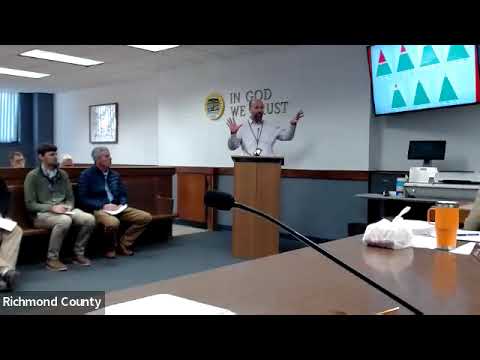
Board agrees to draft DEQ letter asking for testing and monitoring of biosolids after regional concerns about PFAS
Summary
Following an information item and county discussion, staff will draft a letter modeled on Orange County’s to send to the Virginia Department of Environmental Quality asking for PFAS/chemical testing and better permit transparency for biosolids applications; board also asked staff to map existing application sites for planning use.
County staff brought biosolids permitting and public‑health concerns to the board after reviewing a recent Orange County letter and a Delmarva Farmer article about PFAS and other contaminants in land‑applied biosolids.
Staff said legal counsel previously advised (2019) that banning biosolids outright was not advisable, but a locality can submit comments during DEQ permit proceedings and request testing. The county’s current permits were included in the meeting packet for supervisors to review.
Board members raised questions about testing frequency, buffers, soil pH interactions and the variability of treatment plant outputs. One member noted the long‑term persistence of PFAS and described the issue as a 'forever chemical' matter for which more routine testing and public notification would be prudent.
The board reached consensus that staff should draft a letter (based on Orange County’s sample) to DEQ requesting testing for targeted chemicals prior to land application and to track where biosolids are applied within the county. Staff offered to keep an internal map of permitted application fields and to add permit notices to the county’s information flow so supervisors could review them during planning decisions.
No formal ban was proposed or adopted at the meeting; the board’s action was limited to directing staff to prepare and circulate a draft letter expressing localized concerns and requesting additional testing and transparency from DEQ.