Get Full Government Meeting Transcripts, Videos, & Alerts Forever!
Get email alerts on the Traffic Safety topic
No spam. Unsubscribe anytime.
County hears community‑led traffic‑safety ideas for horse‑and‑buggy and bicycle travel
Summary
Following a public traffic‑safety meeting, the board discussed enforcement, signage, strobe lights and public education to reduce crashes involving horse‑drawn buggies and bicycles; local officials said some measures will require state cooperation but the county will pursue signage updates and community outreach.
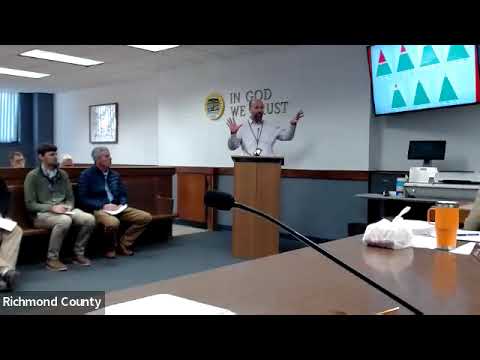
Richmond County supervisors devoted a lengthy portion of their Dec. 9 meeting to traffic‑safety issues raised by residents and the Amish/Mennonite community, focusing on visibility, signage and enforcement along Route 3 and other heavily traveled corridors.
Residents and board members advocated for strobe lights or flashing beacons on buggies, reflective material and public education campaigns. One participant said, "Placement of strobe lights on buggies, I think, should be 1 of the highly push things," arguing that strobes and reflectors would greatly increase visibility at intersections.
Staff said VDOT is working on signage coordination and that some measures — such as mandated equipment for buggies — may require state‑level action or new ordinances. The board also discussed targeted speed enforcement and rotating placement of speed trailers to avoid sign habituation.
Members and community leaders agreed to continue local measures that fall within county authority (increased signage, mapping of routes, community meetings and education efforts) while asking staff to explore state avenues for required equipment rules and to include emails and public input as exhibits in the minutes when appropriate.
The board supported scheduling follow‑up community meetings to review progress and recommended that staff prepare maps of buggy routes and identified high‑travel areas to guide enforcement and signage placement.