Get Full Government Meeting Transcripts, Videos, & Alerts Forever!
Get email alerts on the Land Use topic
No spam. Unsubscribe anytime.
Resident urges Laurens County to shield farms, criticizes ‘Brentwood’ subdivision process
Summary
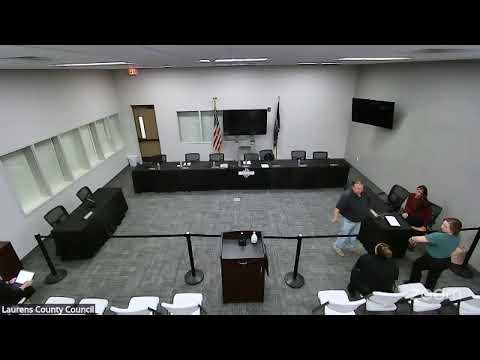
At the Sept. 8 Laurens County Council meeting, resident Ethan Anderson urged stronger farmland protections—buffers, impact fees, larger lot minimums—and criticized a proposed ‘Brentwood’ subdivision he said advanced with limited public notice and without infrastructure studies.
Ethan Anderson, a Laurens County resident, told the county council on Sept. 8 that farmland in the county is at risk from outside developers who buy agricultural land and convert it into subdivisions "with no zoning control." Anderson cited South Carolina law (Title 46, Chapter 45), saying the right-to-farm framework recognizes farming as a protected use and argued the county should adopt "buffers, impact fees, and farmland preservation tools."
"If developers want density, they should build in or near towns where utilities already exist," Anderson said. He called for minimum lot sizes of two to five acres in rural areas, and opposed allowing subdivisions on parcels without sewer or water. Anderson singled out a proposed "Brentwood" development — saying it "appeared on the county website already approved by the technical review committee back in February" — and said the public had little notice of the proposal. He warned that approving subdivisions without infrastructure studies risks overloaded roads, crowded schools, stretched EMS and fire services, and environmental harm such as filled wetlands and polluted creeks.
County officials did not announce a formal response during the public-comment period. Anderson urged the council to consider measures that would channel higher-density growth toward towns with existing utilities and to require infrastructure investments and transparency from developers. His remarks came during the public-comment portion of a meeting that also addressed ordinance revisions and other county business.
What happens next: Anderson’s comments contribute to an ongoing county discussion about revising development rules; council members later opened first reading of Ordinance 9-91, to repeal and replace Division 12 (open-space residential development), and agreed to take that work up in a committee of the whole.