Get Full Government Meeting Transcripts, Videos, & Alerts Forever!
Get email alerts on the School Nutrition topic
No spam. Unsubscribe anytime.
Rappahannock County school nutrition director reports clean federal review; board adopts updated food-service regulation
Summary
The school nutrition director told the school board an October administrative review found no major findings across meal patterns, procurement and civil‑rights checks. The board approved an updated food‑service regulation tied to USDA rules and CEP requirements to preserve federal reimbursement.
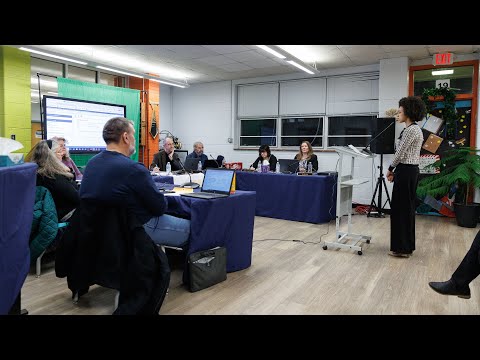
Jackie Tetrick, Rappahannock County Public Schools’ nutrition director, told the school board on Dec. 20 that a recent federal and state administrative review of the division’s school‑meal program found no major findings and that the district remains in good standing with USDA and VDOE.
Tetrick walked members through the compliance steps that underlie every reimbursable meal — federal meal‑pattern rules, production records, point‑of‑service counting and procurement documentation — and warned that an undocumented deviation can jeopardize federal reimbursement. She described the administrative review process as an off‑site document submission followed by a three‑day on‑site observation, and said auditors looked at meal quality, production records, meal accounting, procurement and civil‑rights compliance.
“We were reviewed in October… there were no findings,” Tetrick said. She added that the review identified only a single technical smart‑snack issue tied to an a la carte item in the high school building because eighth graders are housed there and middle‑school rules apply.
Tetrick summarized the district’s meal counts and federal reimbursement rates presented to the board: about 10,625 lunches served at the high school and 15,025 lunches at the elementary school in the period discussed, for roughly 25,650 lunches total; USDA reimbursement rates cited were approximately $4.60 per free lunch, $4.20 per reduced lunch and $0.44 credited for paid lunches, with breakfast reimbursements near $2.46 (free) and $2.16 (reduced). Tetrick cautioned that accurate point‑of‑service counts and production records drive all claims for reimbursement under the Community Eligibility Provision (CEP).
Tetrick also described program improvements supported through participation in the Virginia Food for Virginia Kids cohort, a partnership with the Virginia Department of Education and the Chef Ann Foundation aimed at shifting toward more scratch or speed‑scratch cooking, strengthening local procurement and increasing student participation. She said the program’s operational support and culinary training are designed to reduce food waste and improve menu quality while remaining within USDA nutrient, calorie and sodium limits.
After the presentation, the board voted to adopt an updated regulation for food‑service operations (the EFBA regulation and accompanying meal‑charge regulation). A board member said the regulation formalizes technical assistance and administrative review language so the district can upload a dated, compliant regulation to its VSBA policy system and preserve federal funding.
The board’s actions on the regulation were procedural: a motion to approve was made, seconded and approved by voice vote. The administration indicated the adopted regulation will be dated and entered into the official records.
What’s next: Tetrick said the division will report back on the Chef Ann Foundation review suggestions and on any operational changes to procurement and menu cycles intended to raise participation and protect reimbursements.