Get Full Government Meeting Transcripts, Videos, & Alerts Forever!
Get email alerts on the Land Use Housing topic
No spam. Unsubscribe anytime.
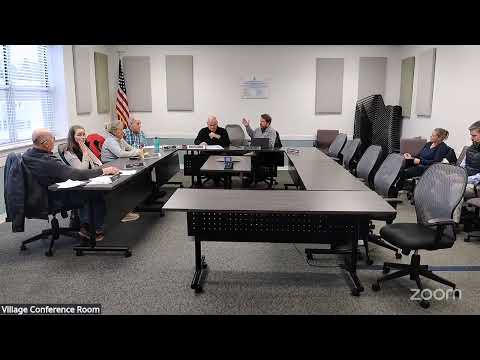
Powhatan planning commission advances housing tools: UDD, ADU changes and higher conservation bonuses debated
Summary
At a commission workshop, planning staff recommended a Unified Development District (UDD) and other zoning tools to steer growth into designated areas. Commissioners debated limits on private roads, higher ADU size caps, cluster housing and an up-to-85% conservation subdivision bonus, and asked staff to return with draft ordinance language in January.
The Powhatan County Planning Commission spent its workshop reviewing Citizens Working Group recommendations that would give staff and developers new tools to direct housing into designated growth areas while aiming to preserve rural landscapes.
Planning Director (Unidentified Speaker 2) introduced the primary proposal: a Unified Development District, or UDD, a single flexible master-plan zoning district intended for application only within designated growth areas. "UDD is envisioned to be a single flexible master plan zoning district that replaces the current village area districts," the planning director said, describing it as a tool to allow coordinated layouts, mixed uses and case-by-case standards rather than many narrowly written village districts.
Why it matters: staff said the UDD would concentrate higher-density and mixed-use developments where utilities and roads can support them, keeping most of the county in larger-lot rural zoning. The CWG also recommended a suite of complementary tools: higher accessory-dwelling-unit (ADU) size caps in some districts, explicit rules for cluster (cottage‑court) housing in growth areas, and a substantially larger density bonus for conservation subdivisions — paired with conditional-use review.
Private roads and lot-size limits were an early flashpoint. Planning staff floated limiting private roads to serve three or four lots to reduce creation of scattered large-lot subdivisions that strain long-term service delivery. Commissioners and attendees disagreed about how widespread private-road subdivision activity has been in recent years and warned of political and property‑value pushback if lot rules change.
On ADUs, staff proposed modestly relaxing size limits to encourage more accessory units without creating oversized second dwellings. The planning director explained current practice and a recommended change: "In A‑10 they're allowed by right up to 50% of the main unit's floor area," he said, and recommended raising the cap in A‑10 to about 60% and in other districts to about 50%, with conditional-use review for larger exceptions. Commissioners noted existing ADU limits on separate tax parcels and owner-occupancy rules that make ADUs less useful as stand-alone affordable housing. As one commissioner put it, "my understanding with the ADU, I don't think that an ADU can be used for affordable housing. It can be used for multigenerational." (Unidentified Commissioner, Speaker 6.)
The commission discussed cluster housing (also described as cottage or pocket neighborhoods) as a way to provide modest homes around shared open space. Staff said cluster housing could be permitted in growth areas either through the UDD or via conditional-use permitting and gave examples from other localities.
Conservation subdivisions drew substantial debate. The CWG recommended increasing the conservation-subdivision density bonus from existing by‑right levels to as much as 85% in exchange for preserving open space. Several commissioners agreed the bonus could be useful but argued that any bonus above the by‑right amount should come through conditional-use review and that rules must prevent applicants from using bonuses to build on prime farmland while relegating conserved open space to wetlands or woods. "If you take it away [the conservation features] then you're lessening — the whole point is those 40 acres are never gonna develop anyways," one commissioner observed, urging clearer protection for agricultural land in bonus calculations.
The commission also reviewed the draft future land-use categories and the names used (for example, 'gateway business' versus 'economic opportunity' or 'planned mixed use'). Members suggested renaming some categories to reduce confusion and discussed whether gateway business should remain strictly commercial or be more flexible.
What the commission decided: no zoning ordinance was adopted at the workshop. Commissioners signaled general support for drafting a UDD and for revising ADU caps and conservation-subdivision rules but asked staff to return with written ordinance language, numeric buffering and design standards, and clearer protections for agricultural land. The planning director said drafting could take months and that staff would reconvene the commission for a January workshop to continue the review and walk maps parcel‑by‑parcel.
Action taken: the commission approved the meeting agenda at the start of the session; substantive policy choices were left for future ordinance drafts and conditional‑use review.
Next steps and timing: staff will prepare a written summary of today's discussion and draft ordinance language for the UDD and related tools. The commission scheduled a follow-up workshop in January to continue map-based review and to consider draft ordinance language.