Get Full Government Meeting Transcripts, Videos, & Alerts Forever!
Get email alerts on the Public Safety topic
No spam. Unsubscribe anytime.
Fire-services review urges stronger coordination, fixes to Halifax County radio system
Summary
A county-commissioned Fire Services Board study presented to the Halifax County Board of Supervisors recommends codifying a Department of Fire and Rescue, addressing radio-system failures, pursuing federal SAFER grant funding and consolidating EMS billing and oversight to address steep volunteer declines and equipment costs.
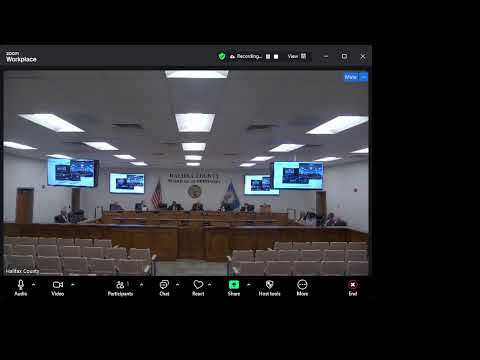
Walt Bailey, a member of the Fire Services Board who led a multi-agency review of Halifax County fire and EMS services, told the Board of Supervisors on Nov. 18 that the county faces “critical” communications problems and a sharp drop in volunteer personnel.
Bailey said the study, produced in August by a team with long volunteer and career experience, found repeated failings in the county’s radio system that threaten responder safety and hamper mutual aid. “If you’re out somewhere and you need help, and there’s nobody answering at the other end of that radio,” he said, “that is critical for us.”
The study recommends that the county consider formally codifying a Department of Fire and Rescue to improve coordination among roughly a dozen volunteer departments and multiple EMS organizations and to reduce duplicate purchasing and inconsistent oversight. Bailey also urged the county to expand the fire and EMS commission and to create a single public safety director or coordinator to oversee grants, operations and standards.
On financing, Bailey highlighted federal grant opportunities, including the Staffing for Adequate Fire and Emergency Response (SAFER) program, and urged the board to consider paying fuel and insurance for volunteer departments and to pursue collective purchasing to lower costs. He noted the high price of capital equipment, citing figures used in the presentation: a fire truck “costs $1,000,000 now,” ladder trucks “$2,000,000,” and ambulances “$450,000.”
Bailey and other presenters recommended consolidating EMS billing to improve revenue capture and sponsoring a local QA position; Bailey said jurisdictions with a local billing QA saw collections rise materially. He also urged modular training to make certification feasible for volunteers who work and have family commitments.
During question-and-answer, board members pressed for technical guidance on a replacement radio system and were told that system design must account for terrain and interjurisdictional interoperability. Bailey cited Charlotte County’s recent $4.5 million system as an example and said the brand or equipment is less important than the system designer and technical support.
The presenters emphasized that implementing the study will take years and suggested starting a strategic planning process and routinely auditing volunteer agencies that receive public funds. The board did not take formal action on the report itself but thanked the presenters and indicated staff follow-up would occur.