Get Full Government Meeting Transcripts, Videos, & Alerts Forever!
Get email alerts on the Project Lifesaver topic
No spam. Unsubscribe anytime.
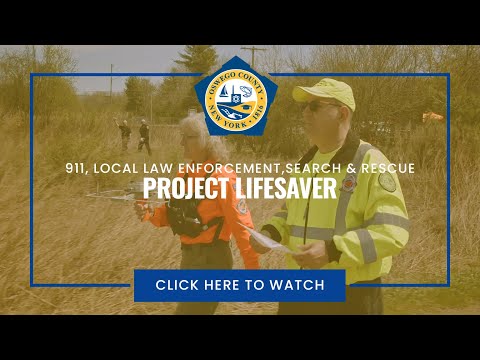
Oswego County presenters describe Project Lifesaver as a near-100% success for locating missing people with cognitive conditions
Summary
Speakers described Project Lifesaver in Oswego County as a program that equips clients with radio transmitters and countywide receivers to help locate missing people with cognitive issues; presenters said transmitters ping every two seconds, batteries are changed about every 60 days, and regional aviation can extend reception range up to about 9 miles.
Unidentified Speaker 1 said the most rewarding part of the program "really is the success rate," adding, "The fact that it's almost a 100%." The speaker described Project Lifesaver as a tool that shortens the time families and caregivers spend worried and stressed when a person with cognitive issues goes missing, and said staff guide caregivers through documentation and enrollment so those who need help receive it.
According to Unidentified Speaker 2, "Every agency in the county is involved in this program" and agencies are certified to manage their own clients. They described how devices are managed: "As soon as we put a battery in the transmitter and put on the vehicle, it's activated," and that "that's sending the signal out every 2 seconds constantly until that battery dies." The speaker added that teams visit clients about every 60 days to change batteries.
Unidentified Speaker 3 outlined the technical operations used in searches: "Each client has a unique frequency" that is entered into receivers, and the speaker said county receivers can detect that radio frequency "up to 2 miles away and we can zero right in on their location." The speaker also listed other search resources—"canines, drones, mapping software"—and said teams can send a message to a phone and receive an exact location reply, while tracking searchers in real time from a command post.
The presentation noted regional support: Unidentified Speaker 3 said Onondaga County's Air 1 is equipped with a Project Lifesaver receiver and "can pick up on a transmitter up to 9 miles away," which extends aerial detection beyond the county's ground receivers. The speaker also said they have been involved in Project Lifesaver since it began in Oswego County and emphasized the program's community benefit: "The most rewarding part of Project Lifesaver ... is the peace of mind that it gives families."
The remarks in the record are program descriptions and first-person accounts by speakers identified only by transcript labels; quantitative claims (for example, the "almost 100%" success rate and stated detection ranges) are presented as the speakers' statements and are not independently verified in the record. The program, as described, continues routine maintenance (battery replacement about every 60 days) and uses a mix of local and regional resources for searches.