Get Full Government Meeting Transcripts, Videos, & Alerts Forever!
Get email alerts on the County Finance Audit topic
No spam. Unsubscribe anytime.
Lyon County board accepts clean audit, approves FY2025 comprehensive financial report
Summary
After a multi-hour review, the Board of Lyon County Commissioners approved the FY2025 audited comprehensive financial report and heard auditors say the statements "present fairly the results of operation and the financial position of Lyon County at June 30."
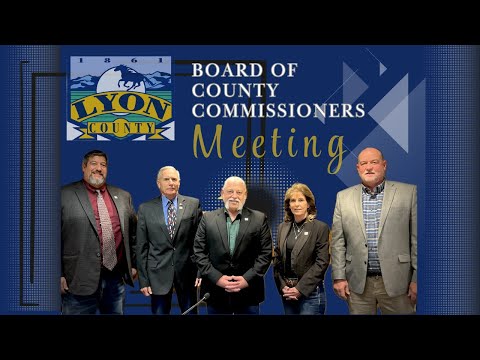
Lyon County commissioners on Dec. 18 approved the county’s FY2025 Annual Comprehensive Financial Report after a presentation by County Controller Josh Foley and the county’s external auditors.
Controller Josh Foley walked the board through the audited statements and the county’s major funds, saying the statement of net position shows roughly $130 million in governmental net position and about $126 million in business-type activities. Foley said unrestricted governmental net position shows a deficit in part because long‑term liabilities such as pensions are recorded even though the county will meet obligations from ongoing revenue: "We're actually one of the top funded pensions in the nation for government pensions, but we aren't 100% funded," he said during the presentation.
Auditor James Schorn of Sarani and Company summarized the audit process and the single-audit testing of federal award programs and reported an unmodified (clean) opinion. "These financial statements present fairly the results of operation and the financial position of Lyon County at June 30," Schorn told the board, noting the firm performed sampling and testing of major transaction cycles and federal programs that met the single-audit threshold.
The presentations highlighted fund balances and cash positions across enterprise funds and the general fund. Foley told commissioners Dayton Sewer and Dayton Water show substantial accumulated depreciation relative to cash set aside for replacement and emphasized the county’s approach of building cash for future capital needs. He also called out the county’s general fund balance of about $9.6 million and explained that consolidated taxes and property taxes are primary unrestricted revenue sources.
Board members asked for clarification on the opioid settlement fund timing, capital projects (including the Dayton Government Complex and Fernley Justice Support project), and the county’s approach to borrowing versus paying cash for construction. Foley said the county typically saves cash for projects rather than issuing debt, but noted the county has used interfund borrowing when appropriate.
After questions, Commissioner Jacobson moved and Commissioner Casanelli seconded approval of the audited report; the motion passed 5-0.
What happens next: The accepted audit will be filed and made available to the public as part of county records; commissioners and staff said they will continue monitoring capital needs and federal grant compliance as projects proceed.