Get Full Government Meeting Transcripts, Videos, & Alerts Forever!
Get email alerts on the Nonprofit Funding topic
No spam. Unsubscribe anytime.
Local nonprofits outline program expansions and discretionary funding requests during borough budget consultation
Summary
A set of Staten Island nonprofits told the Richmond County borough board they need sustained discretionary and occasional capital support to maintain services for seniors, youth, people with disabilities and arts audiences; presenters cited specific asks and program impacts.
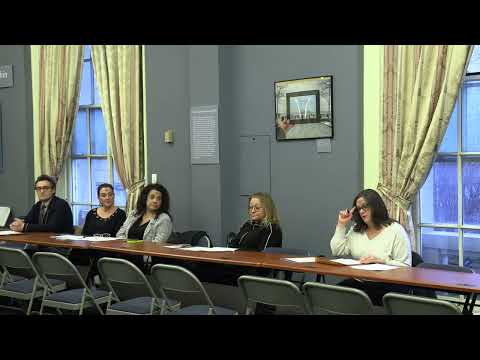
Several Staten Island nonprofits used the borough president's March budget consultation to describe services and request continued or expanded discretionary and capital support.
Ciro Galeno, executive director of the Noble Maritime Collection at Snug Harbor, said the museum expanded hours and served "over 18,000 people," including nearly 4,000 schoolchildren, and asked council members to reinstate discretionary funding. He also reported a capital shortfall after the Department of Design and Construction deemed the museum's $1,250,000 allocation insufficient and said the museum needs an additional $4,000,000 to complete an urgent air‑conditioning upgrade.
Kathleen Bealsa, executive director of Northfield Community LDC, outlined housing counseling, HUD weatherization work and a community land trust (CLT) plan meant to preserve affordability on Staten Island. Bealsa said city‑area home prices average about $720,000 and explained the CLT model: the trust would retain land ownership while homebuyers purchase the house and pay a nominal ground lease.
Alan, conductor for the Richmond County Orchestra and Riverside Opera Company, described free park concerts, youth mentoring and a CASA program at Curtis High School that has run seven years; he said the organizations together reach roughly 20,000 people annually.
Nadia Vanesser, director of development at Iron Mark, requested $75,000 for FY26 to expand programs for people with intellectual and developmental disabilities, described hiring 140 staff in 2024 and outlined plans to build a greenhouse and expand horticulture programming at a newly acquired campus with a target opening around April 1.
Michael DeVito of the New York Center for Interpersonal Development pressed for continued municipal matching and coalition support for YouthBuild funding (noting a prior $2,000,000 ask resulted in $1,800,000) and asked the board to sustain crisis‑management and credible‑messenger programming aimed at reducing gun violence. The JCC’s grants director, Michelle Danza, described 39 funding applications including a $100,000 request for hate‑crimes prevention work, $250,000 for a Compass after‑school program and $75,000 for a creative youth development initiative; she also described Sunrise Day Camp’s transportation and staffing costs.
Alban Atalek, president and CEO of CAST (Community Agency for Senior Citizens), said most of CAST’s baseline funding comes through the Department for the Aging and that borough discretionary funds allow the agency to expand services such as case management and friendly visiting that target social isolation among older adults.
Board members asked clarifying questions about project timelines, capital deadlines and program mechanics; the board agreed to follow up with agencies including DOT and DCLA and encouraged applicants to submit materials ahead of near‑term deadlines.
The meeting did not include formal votes on any of the funding requests; presenters were invited to submit FY26 requests to council members and the borough president’s office for consideration.