Get Full Government Meeting Transcripts, Videos, & Alerts Forever!
Get email alerts on the Pfas Biosolids topic
No spam. Unsubscribe anytime.
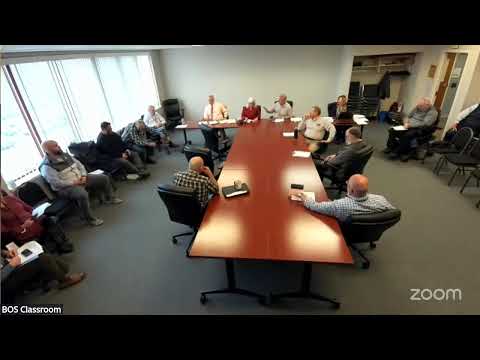
Supervisors probe PFAS risk at county compost facility; refer matter to Public Works
Summary
Supervisors and members of the public raised health and regulatory concerns about PFAS/PFOA in county biosolids and asked for more testing and a review of outside material acceptance; the committee voted to refer the issue to the Public Works committee for further study and potential action including moratorium options.
A long public discussion focused on PFAS (per- and polyfluoroalkyl substances) and the county's composting/biosolids program culminated with the committee referring the matter to Public Works for more detailed review.
A member of the public, Ron, asked permission to take a small sample from the county's transfer/compost facility and urged stronger action, including a county moratorium on spreading biosolids on agricultural land. Ron said he reviewed the annual composting report and raised concerns about donated or free distribution of finished compost to local farms and how that practice interacts with potential PFAS contamination.
Kevin, who spoke for the sewer/district operations, described past testing the district conducted to establish a baseline and cautioned about the chain-of-custody and sampling validity of third-party samples. Kevin reported results from district sampling of finished compost: "7 parts per billion for PFOA and 9.87 for PFOS," and referenced interim DEC materials-management guidance (action level ~20 ppb for repeat sampling; other states and analyses use different thresholds). Kevin said the district had historically sampled and that the reported results fell below the interim guidance levels discussed.
Supervisors and commenters debated options including: accepting only material generated by the county's permitted sources; regular periodic testing to establish a time series; a temporary moratorium on outside loads; and potential costs and logistics for landfilling or shipping biosolids out of state if stricter limits are adopted. Kevin estimated current compost facility operating costs at roughly $100,000 (shared with Lake George) and said landfilling the county's wet sludge could cost over $200,000 — figures supervisors cited while weighing operational consequences.
The committee agreed to move the issue to the County Public Works committee for a deeper review of testing frequency, sampling protocols, legal authority for limiting incoming loads and possible moratorium language. Several supervisors asked county public health and state DEC staff to be consulted so the county can ground any local action in public-health guidance and state regulatory expectations.
What happens next: the PFOA/biosolids topic will be reviewed by Public Works; supervisors requested follow-up testing data, chain-of-custody protocols and consultation with DEC/public-health officials before considering a local moratorium or operational changes.