Get Full Government Meeting Transcripts, Videos, & Alerts Forever!
Get email alerts on the Environment Pfas topic
No spam. Unsubscribe anytime.
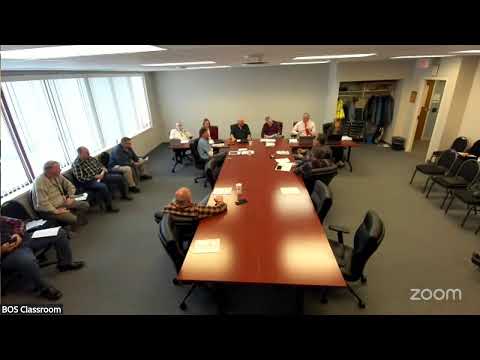
Washington County committee backs quarterly PFAS testing, refers proposed moratorium on outside sludge to full board
Summary
After extended debate, the Department of Public Works Committee voted to send a proposed local moratorium on PFAS-containing sludge and compost from outside Washington County to the full Board and approved quarterly PFAS testing at the county compost facility, voting to collect baseline data as state guidance remains pending.
Unidentified Speaker 9, an attendee who introduced the topic, moved that the county adopt a moratorium on outside-sourced PFAS-containing compost and sludge with fines for violations; the committee voted to forward that local law proposal to the full Board for introduction in December and a vote in January. "I'll make a motion that we have a moratorium," said Unidentified Speaker 9, who proposed an initial $5,000 fine rising to $10,000 on repeated violations.
The committee then approved a separate motion to implement supplemental quarterly PFAS testing at the county composting facility to establish a baseline and inform next steps. "I'd like to build a motion that we implement a county PFA supplemental quarterly testing regimen at our, compost facility," said Unidentified Speaker 11, who stressed the need for data after citing personal experience with PFAS impacts. The motion carried with one recorded dissent.
Committee members debated enforcement mechanics and costs. Several speakers noted the county has only one documented PFAS test of the finished compost taken within the past few years and that enforcement sampling typically costs about $500 per sample. Unidentified Speaker 10, who operates the composting facility, said the plant's existing sampling met state requirements and cautioned about the precedent of testing for an unregulated class of contaminants: "I do not recommend doing any additional sampling," he said, citing uncertainty about treatment options and the precedent it would set.
Others emphasized precaution and local protection. Unidentified Speaker 14, who described prior attempts to recruit third-party testing through local advocacy groups, urged regular monitoring: "Without that confidence or that testing, you really have nothing to support what you're trying to do there," he said, advocating for independent samples to verify finished-compost safety.
On the moratorium, the committee discussed exemptions for the county-owned composting operations (including the Lake George facility) and the practicality of per‑load enforcement; members asked staff for lists of suppliers that regularly send material to the facility and for legal review of enforcement mechanisms. Several speakers warned of potential legal challenges if the moratorium restricted interstate or out‑of‑county transactions; others pointed to examples of neighboring counties that set steep daily penalties.
The testing program will use a scientific protocol with chain-of-custody procedures and return quarterly results to the committee. Committee members directed staff to collect the first three data points in 2026 so the county can respond rapidly when the state issues interim guidance or regulatory limits. The committee framed testing as informational (data collection) at this stage; future regulatory steps will be decided after analyzing the results and any updated state guidance.
Next steps: the moratorium proposal will be introduced at the December full Board meeting and slated for a January vote; quarterly testing results will be reported back to the Public Works Committee as received.