Get Full Government Meeting Transcripts, Videos, & Alerts Forever!
Get email alerts on the Elections topic
No spam. Unsubscribe anytime.
Ware County election official warns statewide equipment change could shift major costs to counties
Summary
Carlos Nelson of the local Board of Elections told the Ware County commission the state is reviewing three options for voting equipment — upgrades, full replacement, or paper ballots — and that removing QR codes by July 1, 2026 could force expensive changes that small counties may not be able to afford.
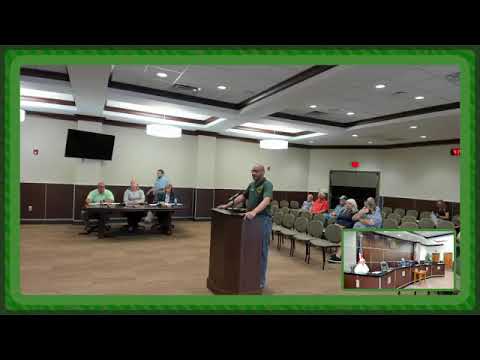
Carlos Nelson, a Ware County Board of Elections official, told the county commission on Sept. 22 that a state "blue ribbon" review is considering three options for election equipment: upgrade existing machines, replace equipment statewide with new vendors, or move to paper ballots. Nelson said any change will be expensive and urged commissioners to coordinate with the Association County Commissioners of Georgia and state legislators.
"I'm more concerned about the cost of the taxpayers, no matter which way to go," Nelson said, warning that even an 80/20 cost-share would be a heavy burden on smaller counties. He noted the state currently centralizes procurement and supplies equipment to counties, and said a change could leave counties responsible for millions in new purchases and training.
Nelson also flagged a law setting a July 1, 2026 deadline to remove QR codes from ballots, saying that requirement has accelerated talks and could force new equipment or a larger absentee-ballot program. He described local maintenance costs as relatively modest — a basic contract of about $2,000 annually — and said an extended warranty option would cost counties far more.
Commissioners asked about equipment lifespan and error rates. Nelson said machines typically have a 10-to-15-year service expectancy with updates and that annual statewide audits show small discrepancies ("less than a half a percent" statewide in his account). He urged the commission to raise the county's concerns with state delegates so any procurement plan accounts for smaller jurisdictions' budgets.
The commission did not take formal action on Nelson's presentation, but staff and commissioners agreed to track the proposal and to raise the county's financing concerns with legislators and ACCG. The board did not adopt a formal county funding pledge during the meeting.