Get Full Government Meeting Transcripts, Videos, & Alerts Forever!
Get email alerts on the Road Widening topic
No spam. Unsubscribe anytime.
Forsyth County details coordination, funding and timeline for final Old Atlanta Road widening
Summary
Forsyth County’s capital projects director said crews are widening the final 3.5‑mile segment of Old Atlanta Road from two to four lanes, citing coordination with 14–15 utility providers, SWOS and impact‑fee funding, and near‑term work including utility relocations and construction of about 19–20 retaining walls.
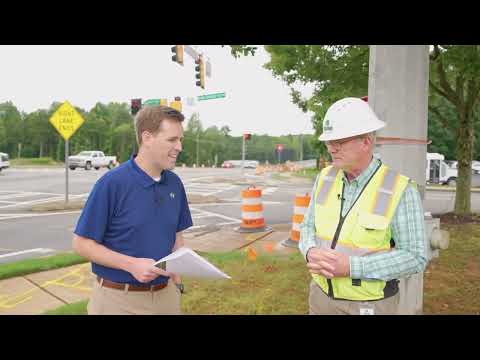
Forsyth County’s director of capital projects, John Jefferson, said the county is building the final 3.5‑mile segment of Old Atlanta Road, converting it from two lanes to four to serve growing traffic in the southern end of the county.
Jefferson told On The Move that “So we’re widening this is the last segment of Old Atlanta, that's 2 lanes that we're widening to 4.” He said the stretch runs from James Burgess to the entrance to Saint Marlow and that the project has been under construction for more than a year.
Why it matters: The widening is intended to improve traffic flow for commuters, residents and local businesses along a corridor that is seeing increased development. Jefferson said the project is funded through county capital outlay and impact fees and by SWOS program rounds (referenced in the transcript as “SWOS 7” and “SWOS 8”), which the host said were critical to getting the work started.
Key challenges and sequencing: Jefferson said the biggest challenge has been coordinating utilities. "We have 14 or 15, separate utilities," he said, listing multiple telecom and power providers and noting that many utilities have both overground and underground facilities. He added that the county does not have direct control over private utilities because they are regulated by the Public Service Commission, and relocations are typically the utility’s responsibility. That regulatory relationship and the need to sequence utility relocations have complicated scheduling.
Delivery method and phasing: Jefferson explained the county used a design‑build delivery so design and construction could overlap. The design‑build approach let the project be split into phases (phase 5 released before phase 4), allowing contractors and utility relocations to begin earlier than under a traditional design‑bid‑build approach.
Near‑term work and staffing: Jefferson said utility relocations have been underway for more than a year and that a county staff member, Chris Cade, is dedicated to following up with utilities and helping to remove obstacles. He said Atlanta Gaslight (named in the transcript) is expected to finish corridor work by about August, and the project includes roughly 19–20 retaining walls—some already built, some in construction and some awaiting utility clearances to be released for completion.
What’s next: Jefferson reiterated that the team is trying to do multiple tasks at once—utility relocations, retaining‑wall construction and roadway widening—while keeping the corridor open for traffic. The show’s host said viewers can find more information at forsythco.com and on TV Forsyth.
The episode closed with a preview of a future On The Move segment covering projects on GA‑369.