Get Full Government Meeting Transcripts, Videos, & Alerts Forever!
Get email alerts on the Budget topic
No spam. Unsubscribe anytime.
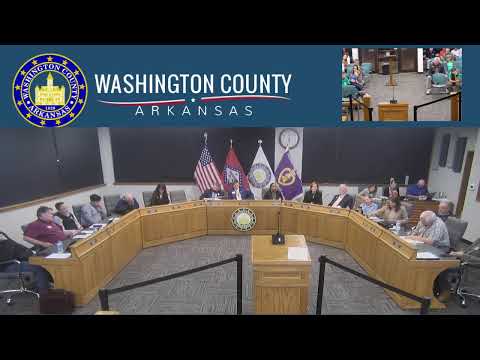
Washington County quorum court fails to pass 2026 budget on first reading after heated debate
Summary
The Washington County Quorum Court failed to pass its proposed $129.7 million 2026 budget at first reading after divisions over reserves, a proposed 2.9% COLA, and public concerns about a jail expansion and nonprofit spending.
The Washington County Quorum Court declined to approve the county'9s proposed 2026 budget on its first reading after extended debate over reserve levels, employee pay proposals and questions from residents about program oversight.
Justice Lyons moved to pass a $129,707,474 budget that includes a 5% step plan for county employees and labor costs that account for 53.7% of the total. Comptroller Sherman told the court that adding a 2.9% cost‑of‑living adjustment, as proposed in an amendment by Justice Rio Stafford, would "add $1,800,000 onto the overall labor cost of the budget" and would reduce several unappropriated reserves sharply, citing specific impacts on the road and jail funds.
Comptroller Sherman said, "If we added a 2.9% COLA... it would add $1,800,000 onto the overall labor cost of the budget and take labor from 69,700,000 to 71,500,000." He warned that the county'9s general unappropriated reserve would fall substantially and that the insurance fund faces rising claims and stop‑loss exposures.
Justice Lyons defended the budget and the step plan, saying, "I think we've done right by our employees with the 5% step plan." He and other supporters urged passage in November to give HR time to implement changes and avoid a staffing and payroll crunch.
Several justices and members of the public urged more scrutiny. Sherry Main, a resident who reviewed the packet, asked for written justifications for multiple line‑item increases in the judge'9s and other budgets, including IT and professional services. Public commenters including members of the Arkansas Justice Reform Coalition and other residents pressed for transparency on a separate $18.8 million jail expansion (funded with American Rescue Plan dollars) and questioned whether county funds and grant funds were being spent without adequate oversight or competitive procurement.
A motion to postpone the budget until December failed on roll call. After debate and an attempted amendment that was later withdrawn, the final roll call on the appropriation ordinance did not reach the votes necessary for passage at a single reading; the judge announced the item would move to a second reading in December.
What happened next: the court recorded the roll call and the judge said the budget item "will move to a second reading on December." The hearing included multiple requests from justices and the public for additional breakdowns of specific budgets and program oversight before the next vote.
Why it matters: the budget sets pay, staffing and operating plans for county government. Failure to pass on first reading requires the court to take the item up again in December and prolongs uncertainty for HR, payroll and departments that need to implement next year'9s plan.
Next steps: the budget will be reconsidered at the December quorum court meeting; members asked the comptroller and relevant departments to provide additional documentation on contested line items and on the fiscal impacts of any future COLA.