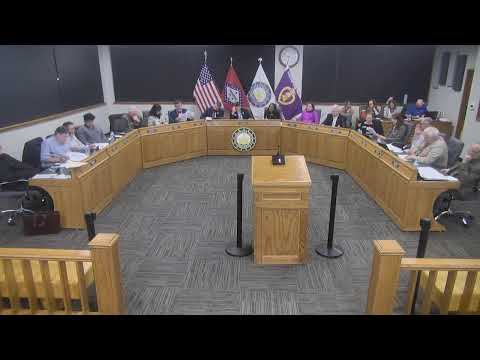
Washington County approves $500,000 settlement in federal case with Eagle Crest after contentious debate
Loading...
Summary
After extended public comment and divided debate, the Washington County Quorum Court voted to approve a $500,000 appropriation to settle a federal lawsuit alleging Fair Housing Act and ADA violations by Eagle Crest LLC, with supporters saying it caps taxpayer exposure and opponents warning it sets a bad precedent.
The Washington County Quorum Court voted to appropriate $500,000 from unappropriated reserves to settle federal litigation brought by Eagle Crest LLC alleging violations of the Fair Housing Act and the Americans with Disabilities Act.
Justice Eke introduced the appropriation ordinance. The measure prompted an extended discussion among justices and residents: some members warned the county faced a substantial probability of losing at trial and could incur far greater costs, while others criticized the county's prior handling of the matter and said settling rewarded noncompliance.
Justice Lyons said he would "support this ordinance to approve this ordinance and pay this settlement to put this to bed and and move on," arguing the county faced significant legal risk if it continued to litigate. Justice Rio Stafford framed his decision in three words — "risk, responsibility and reality" — saying a federal civil-rights suit carried high stakes and that a judge previously had described a substantial probability of losing. He added that federal law (the ADA and Fair Housing Act) outranks local ordinances and limits what the county can enforce.
Opponents including Justice Massengill and others warned that approving the payment would cost taxpayers and could set a precedent that encourages litigation against the county. Members of the public urged more transparency about settlement terms and asked whether written settlement terms existed and whether conditions could be attached to the agreement.
County counsel and several justices said the settlement would allow the county to cap its exposure and move forward; counsel noted that some enforcement authorities (septic and fire-code inspections) fall to state agencies, not the county.
On roll call the appropriation ordinance passed with the number of affirmative votes needed; the court recorded several no votes and one abstention in the roll call before the motion carried. The settlement ordinance passed and the county will appropriate the specified funds as ordered.
The court’s next procedural steps, according to speakers during debate, are to implement any court-ordered settlement provisions and to consider future planning-and-zoning code changes to reduce the chance of similar disputes.
The controversy prompted multiple public comments calling for independent counsel, better transparency and code updates to prevent recurrence.