
Homeowners say Ireland's enhanced grant scheme leaves families trapped in homes damaged by tainted aggregate
Get AI-powered insights, summaries, and transcripts
Subscribe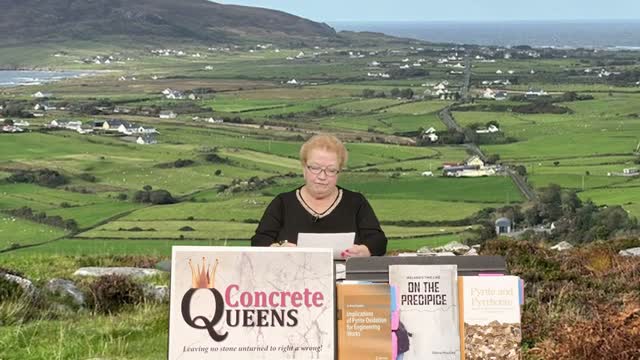
Summary
Debbie McCoy, a long-time advocate for homeowners affected by tainted aggregate, told listeners the enhanced '90/10' grant scheme is failing victims of defective concrete blocks and pyrite-related damage because of three barriers: upfront costs, shortfall amounts and a punitive damage threshold.
Debbie McCoy, who identified herself as the host and as the "Connecticut Concrete Queen," warned in a Dec. 17 recording that homeowners whose houses contain tainted aggregate are being trapped in structurally unsafe homes by a grant scheme that, she says, does not cover real-world costs.
"This is abuse. This is disgusting... It's mental torture," McCoy said, describing homeowners who lack the funds to meet the scheme's upfront or shortfall costs and who remain unable to qualify under the program's damage threshold.
McCoy summarized two distinct crises: pyrite heave affecting sites where contaminated aggregate was used as fill, and defective concrete blocks that left entire homes weakened. She said the earlier pyrite remediation response included testing, a government-led remediation scheme and no-cost repairs for homeowners, while the later enhanced scheme for defective blocks has produced delays, narrow eligibility and what she described as inadequate payments.
McCoy outlined three practical barriers she said keep homeowners from accessing the enhanced grant: upfront costs required to start works; a persistent "shortfall" where the grant does not cover the full cost of repair; and a damage threshold homeowners must meet to qualify. She attributed the identification of those barriers to homeowners' reports and to a 2023 banking/insurance group summary she referenced during the show.
The recording names several institutions and officials involved in remediation and review, including the Housing Agency, the Pyrite Resolution Board (PRB), and individuals McCoy said have served on expert groups and panels: former ministers such as Phil Hogan, housing civil servants, John O'Connor (chair of several panels and former CEO of the Housing Agency), Martin Lynch (general manager of the PRB), Paul Ford (engineer and expert-panel member), Paul Benson (former DOH officer), and John Wickham (senior adviser on building standards). McCoy also referred to Irish technical standards she said govern aggregate testing, naming IS 398 (pyrite) and IS 465:2018 (concrete blocks) and urging stricter enforcement.
McCoy criticized what she described as a pattern of non-enforcement and insufficient market surveillance for quarries and aggregate suppliers. She also raised problems with consulting-engineer practices and indemnity insurance: she said homeowners' privately commissioned engineers' recommendations have at times been superseded by tendered consulting engineers used by the Housing Agency, and she said many IS 465-registered professionals cannot obtain indemnity insurance.
On program performance, McCoy said the original pyrite remediation scheme has repaired "over 3,000 homes" in about a decade, whereas she said the enhanced 90/10 scheme for defective blocks had delivered much less—"in five years, this enhanced scheme did only 7%" (figures McCoy presented as her account of repair outcomes). She also cited an estimate that as many as 60,000 homes could be affected in some appraisals, and she warned the eventual cost of rectifying all damage could be very large; she framed these figures as estimates and attributed them to her reporting and documentary sources discussed in the segment.
McCoy said an Attorney General's letter dated 09/07/2021 influenced later agency action and that she planned to read and discuss it in a follow-up segment. She closed by saying she would address additional officials and the National Standards Authority of Ireland (NSAI) in the next episode.
The recording is a commentary and compilation of McCoy's reporting, named media articles and selected public records she cited; claims of procedural wrongdoing, specific repair counts and cost estimates are presented in the recording as McCoy's reporting and interpretation, not as independently verified facts.
The show is not a formal hearing or government record; it is a single-speaker segment that mixes named-source citations, media references and McCoy's first-person reporting and advocacy.