Get Full Government Meeting Transcripts, Videos, & Alerts Forever!
Get email alerts on the Land Use Energy topic
No spam. Unsubscribe anytime.
Oliver County adopts wind-energy and battery-storage rules after industry collaboration
Summary
Oliver County commissioners approved a new wind-energy ordinance and a battery-energy storage ordinance after multi-meeting review with industry and residents; the rules set setbacks, safety, water-use and decommissioning standards and require road-use agreements and financial assurance from applicants.
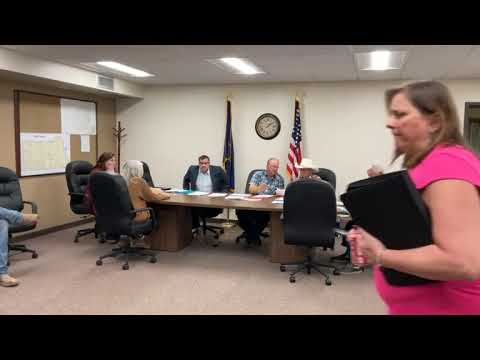
Oliver County commissioners approved two new planning ordinances on Sept. 11, adopting zoning standards for wind-energy facilities and rules for battery-energy storage systems after months of drafting with industry and the county planning staff.
The wind-energy ordinance, read into the record by planning staff, lays out detailed standards on appearance, setbacks, public-safety plans, collector-system installation, erosion control, archaeological and biological surveys, water-use permitting and a requirement that applicants submit decommissioning financial assurance and a road-use and maintenance agreement. The ordinance requires applicants to provide GPS coordinates for turbines, a mitigation plan for trade and shrub impacts, and prompt incident reporting to the county emergency manager.
Industry representatives present, including Austin Collins of the Firehawk Wind Project, told the planning and zoning board and the commissioners they had no objections and that their companies could comply with the new rules. Commissioners thanked staff for extensive stakeholder engagement and moved to waive a formal, full reading and enter the ordinance into the county record.
Separately, the county adopted an ordinance governing battery-energy storage systems. Planning staff and industry said they had convened panels and technical briefings earlier in the year to address safety, fire protection and operational standards. No formal public opposition was recorded at the meeting. Commissioners recorded a roll-call vote to approve the battery ordinance.
Both ordinances were presented as part of the planning and zoning process; staff said the same collaborative approach would be used for forthcoming solar and data-center ordinances and recommended the county coordinate with statewide templates being developed by the North Dakota Association of Counties and the League of Cities.
The commission entered the final vote after discussion and public comment and directed staff to file the adopted language in the county record. No implementation timeline beyond routine permitting processes was specified at the meeting.