
RSU 10 officials defend single‑occupancy bathrooms, promise wall and supervision changes after community concerns
Get AI-powered insights, summaries, and transcripts
Subscribe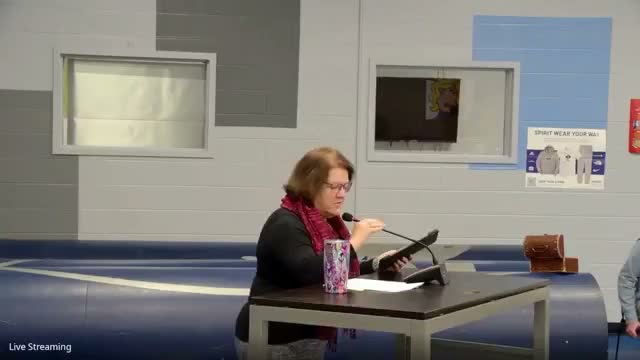
Summary
RSU 10 superintendent presented design choices for the new Mountain Valley Community School — including single‑occupancy bathrooms and an optional dividing wall in the athletic prep area — and pledged operational controls, staff training and an expedited installation timeline after residents raised safety and supervision concerns.
Mountain Valley Community School officials told a packed informational session that the district designed the new pre‑K–8 building to prioritize student privacy and reduce bullying, and that a dividing wall in the athletic locker area will be installed before the facilities are used for school sports.
"This building is 100% funded through the state," Superintendent Alden said during the Dec. 30 meeting, noting the district did not ask local taxpayers to fund the construction. Alden described a design that places single‑occupancy restrooms inside classrooms for younger grades and multiple single‑use toilet rooms along middle‑school corridors to increase visibility and supervision.
The design choices have drawn vocal questions from residents worried that floor‑to‑ceiling single‑stall rooms and a closed locker configuration could make it harder to detect misconduct or provide rapid help to a student in distress. One resident said the hallway stalls could become "a perfect prison for someone to be pulled in and raped," while another asked how staff would gain access if a person in a stall were suicidal or in medical distress.
Alden said the design was informed by Department of Education recommendations on reducing bullying and by recent updates to building codes that allow single‑occupancy toilet facilities in public construction. She said the option to add a dividing wall in the athletic prep area was introduced after a DOE staffer attended a national conference on design to improve supervision (the staffer returned on 11/10/2022) and that Harriman, the architect, researched and brought forward the option.
To address supervision concerns, Alden detailed operational changes: the athletic prep doors will be locked during the day unless a teacher or coach is present; the athletic director recommended an "all in, all out" protocol — where an entire team and coach enter and leave together — and teams will be limited to one side of the space when the wall is in place. Alden also said the district will conduct staff walkthroughs and training in the weeks before occupancy, and that multiple designated staff members will hold keys or access to open rooms when necessary.
Several residents asked when the wall would be installed. Alden said the DOE asked contractor Landry French for expedited pricing and that the district expects the wall to be installed before the spring sports schedule begins; a specific completion date was not available at the meeting. She also said change orders were frequent during the project and that many are processed administratively by district staff, the architect and state school construction representatives rather than presented to the full board.
Community members raised separate safety questions about using the building's "community stairs" — tiered seating that can hold roughly 100 students — instead of a traditional auditorium. Alden acknowledged the concern and said the district will consult protocols used elsewhere and discuss the architect's guidance to reduce risks in emergency situations.
On health services, Alden confirmed the building includes space for a clinic and dental services; the district currently does not have a provider MOU but will have two nurses on staff and space for three to four examination rooms if a partner is secured.
The meeting closed with the district reiterating its commitment to install the wall before athletic use, to finalize supervision protocols and to publish updates on the district website and social media. Alden invited residents to request change‑order records and related communications through the district's public‑records process; she said many meeting records and policies (including policy JICJ on student communications/cell phones) are available on the district website.
The district did not take any formal vote at the session; it framed the meeting as informational and promised follow‑up details on timeline and operational procedures.