Get Full Government Meeting Transcripts, Videos, & Alerts Forever!
Get email alerts on the Criminal Justice Reentry topic
No spam. Unsubscribe anytime.
Sheriff asks county to temporarily fund jail peer‑support program until grant cycles resume
Summary
Sheriff David Bobby asked commissioners to use opioid fund dollars to continue a jail peer‑support program run by a recovery provider until OneOhio/grant funds are available in mid‑2026; the program has engaged about 80–100 inmates with reduced recidivism among participants.
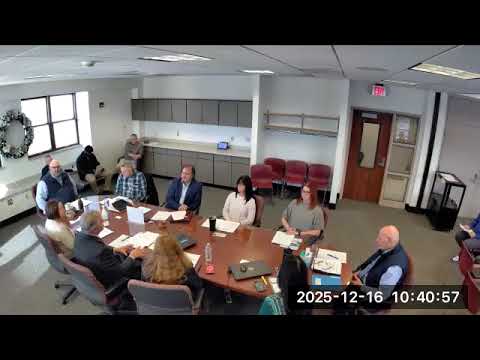
Trumbull County Sheriff David Bobby asked the commissioners to provide interim opioid‑fund support to sustain a peer‑support program operating inside the county jail until new grant funds become available.
Bobby introduced Justin of Private Recovery Services/Thrive, the program operator, who described an 11‑month pilot that engaged about 80–100 incarcerated individuals. Justin said the program focuses on individualized recovery planning and connection to medication‑assisted treatment or residential providers after release; he told the board that, of the roughly 100 people engaged, 18 had returned to custody.
The program was initially funded by a OneOhio settlement grant that expires at the end of the year; the sheriff and provider said the next round of statewide funding will open in early 2026 and a local RFP process and provider approval could delay award of those funds until mid‑year. Sheriff Bobby asked the board to cover roughly $150,000 in operating costs (staff, administrative expenses) so the program can remain in the jail and avoid the disruption and retraining costs of pausing and restarting services.
Commissioners expressed broad support in principle and emphasized the county should seek reimbursement if the state grant awards are approved; one commissioner noted the value of in‑custody linkage to treatment and the program’s early outcomes. No formal vote or appropriation was recorded at the meeting; staff were asked to include the request in upcoming budget materials and provide the detailed cost breakdown Bobby referenced in a letter to commissioners.
Next steps: Sheriff will submit the cost breakdown and staff will place the request on a future agenda for formal action and appropriation if the board chooses to proceed.