Get Full Government Meeting Transcripts, Videos, & Alerts Forever!
Get email alerts on the Public Safety 911 topic
No spam. Unsubscribe anytime.
Trumbull County weighs cutting nonemergency rollover calls, debates AI for 911 intake
Summary
After hearing that the county answers roughly 200,000 nonemergency rollover calls a year, commissioners and 911 leadership debated whether to adopt an AI-assisted intake, require townships to pay for rollover coverage, or change nonemergency routing to relieve dispatchers and protect emergency response.
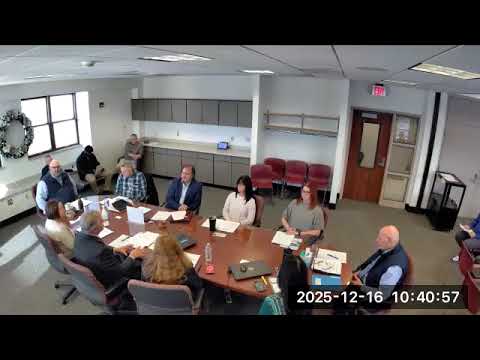
Trumbull County commissioners spent a prolonged portion of their meeting weighing how to reduce nonemergency call volume that county 911 staff say is harming emergency dispatch capacity.
Tice McDowell, the county 911 director, told the board that the center receives roughly 200,000 nonemergency rollover calls annually and is not meeting state response thresholds. That high volume, McDowell and staff said, reduces the center’s ability to reliably meet emergency call‑handling standards and strains an already understaffed unit.
The board discussed several options. One approach is to stop accepting rollover nonemergency calls from townships and require those jurisdictions to operate their own after‑hours lines or pay the county an additional fee for rollover service. Another idea is to hire a cadre of lower‑acuity call takers to handle nonemergency inquiries and preserve trained dispatchers for emergent radio dispatch duties.
A contentious proposal introduced during the discussion was to use an AI‑based intake or portal to handle routine nonemergency interactions. Some commissioners and dispatch staff strongly opposed the idea, saying residents expect a human “warm body” for crisis calls and that an automated system could frustrate or misroute callers. One commissioner said of the AI demonstration presented earlier, “No way. We don't want to deal with a bot,” reflecting concerns raised by staff and the public.
Proponents argued that some neighboring jurisdictions use technology or portals to triage nonemergency contacts and that a thoughtfully implemented system could redirect routine inquiries and free dispatchers for emergencies. Commissioners also discussed changing the publicized 10‑digit phone numbers for nonemergency services and pursuing a public‑education campaign so residents call the correct agency.
The board directed staff to gather more information: which neighboring counties accept nonemergency rollover calls and how they handle them, the cost and contract terms of proposed AI/portal services, and options to retrofit a state‑purchasing contract for urgent repairs or purchases tied to 911 operations. The discussion will feed into a planned “final plan” for the county 911 center, which commissioners said should include funding formulas and service expectations before any major operational change.
Next steps: staff will research regional practices, provide cost estimates for alternate staffing models and AI portals, and convene meetings with township and municipal leaders before the board adopts any permanent change.