Get Full Government Meeting Transcripts, Videos, & Alerts Forever!
Get email alerts on the Energy Solar topic
No spam. Unsubscribe anytime.
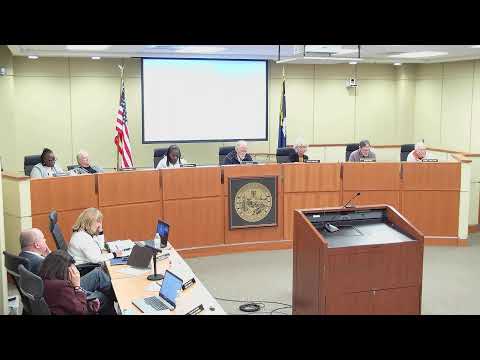
Greenwood County approves second reading for Duke Energy solar rezoning amid fierce public debate
Summary
After hours of public comment weighing environmental and visual impacts, Greenwood County Council approved second reading of a rezoning request that would allow a Duke Energy utility‑scale solar project to proceed to the next step; council asked the developer to answer a list of written questions before third reading.
Greenwood County Council on Oct. 7 approved second reading of a zoning map amendment that would reclassify three parcels totaling about 1,005.71 acres from forest‑agriculture to rural development, a change Duke Energy said is needed to permit a utility‑scale solar farm. The vote followed an extended public hearing and a divided council vote to move the ordinance forward while collecting detailed questions from council members for the developer.
Why it matters: The rezoning opens the way for a large‑scale solar project on land off Rockhouse, 5 Notch and Hunter roads that Duke Energy estimates could involve leases on roughly 2,500 acres and place panels on about 1,000 acres. Proponents emphasized long‑term land leases, construction jobs and decommissioning commitments; opponents warned of visual intrusions, erosion and wildlife loss in a rural area.
What the council heard: Sterling Bowen, Duke Energy project manager, outlined the company’s preliminary plan, saying the project targets an in‑service date near 2030 and that construction would likely last 14–20 months. Bowen said preliminary studies (phase‑1 environmental review, wetland delineation, threatened‑species and hydrology studies, glare and acoustic modeling) are planned and that the developer had filed an interconnection application and is considering battery storage and a substation.
Supporters, including a landowner who agreed to lease property to Duke and an independent health‑and‑safety consultant engaged by Duke, said utility‑scale solar is a common, low‑impact use that can be screened with buffers and evergreen plantings and that leases include decommissioning terms to return the land at the end of a contract.
Opponents questioned the scale and placement of arrays and expressed concerns about erosion on hilly terrain, the loss of rural character, and potential declines to wildlife habitat and property values. Several residents said maps shown during the presentation suggested a broader footprint than the parcels now before the council.
Council action and next steps: A motion to deny the ordinance failed. A subsequent motion to pass the rezoning at second reading carried 4‑2 with the understanding that council members will compile questions for Duke Energy; the manager and clerk will assemble and deliver those questions to the developer. County staff and the developer indicated additional technical and permitting steps (wetland delineation, engineering, stormwater plans, state permitting and interconnection studies) remain before construction could begin.
What was not decided: Second reading does not authorize construction; final approval requires third reading and completion of required environmental and permitting clearances. The council requested detailed, written responses from Duke addressing layout, exact acreage of arrays, erosion controls, wildlife impacts, buffer plantings, construction staging and interconnection plans.
The council scheduled third reading at the next regular meeting, and staff said the video and a compiled list of council questions will be provided to the developer and posted to the county record.