Get Full Government Meeting Transcripts, Videos, & Alerts Forever!
Get email alerts on the Open Government topic
No spam. Unsubscribe anytime.
Legal consultant briefs board on FOIA, conflicts of interest and meeting rules
Summary
A legal presenter reviewed Virginia open‑meetings (FOIA) requirements, public-records obligations, remote participation rules, penalties for violations, and conflict-of-interest guidance to help board members avoid disclosure and procedural pitfalls.
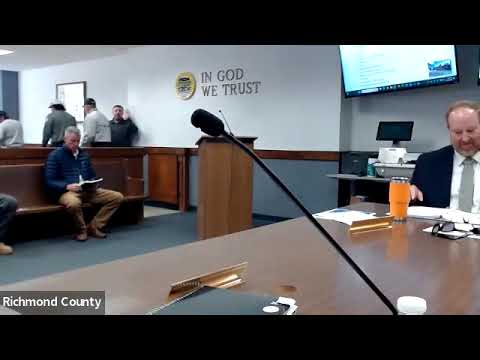
The Richmond County Board received a presentation on Virginia’s Freedom of Information Act (FOIA), board confidentiality and conflict-of-interest rules from Kelly Kemp (presentation first recorded at SEG 3031).
Kemp outlined key points: what constitutes a 'meeting' under state law (three or more members discussing public business), how to notice meetings and agendas, and that votes must occur in public session (not in closed session). She reviewed common FOIA request handling — production, redaction, withholding or seeking extensions — and noted the five-business-day statutory response window. She emphasized the range of public-records that can be covered by requests (emails, texts, social-media materials) and noted exclusions and penalties for willful violations.
Kemp also discussed conflict-of-interest rules, including financial thresholds and the narrow definition of household members whose interests create disqualifying conflicts; she recommended seeking an attorney opinion when in doubt. Board members asked practical questions about charges for FOIA requests, remote participation notices and keeping minutes.
The presentation concluded with a reminder that open‑meetings and FOIA issues frequently arise in contentious development matters and that careful process and documentation reduce litigation risk.