Get Full Government Meeting Transcripts, Videos, & Alerts Forever!
Get email alerts on the Solar Permitting topic
No spam. Unsubscribe anytime.
Richmond County reviews solar permitting conditions after resident raises environmental concerns
Summary
A resident urged Richmond County to tighten oversight of industrial-scale solar projects sited on farmland and sensitive areas. County staff outlined the multi-step permitting review and existing requirements — including erosion-control plans, soil testing, decommissioning plans and bonds — and said no new local ordinance was proposed at the meeting.
A resident urged Richmond County officials to slow the spread of industrial-scale solar after saying projects have been placed on prime farmland and in environmentally sensitive areas.
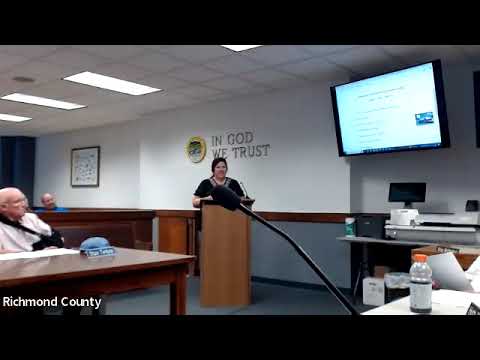
"As a Richmond County, we're here to express serious concerns about the growing presence of industrial solar panel projects in our community," Rachel Lewis told the planning commission during public comment, saying she will provide additional research to county staff.
County planning staff member Hope walked commissioners through the established permitting path for large solar projects and the conditions staff already require. "We start getting the decommissioning plan. We start getting the emergency response plan. We have a construction traffic management plan. We have an erosion and sediment control plan, stormwater management plan," Hope said, describing documentation that must be submitted and reviewed before any construction begins.
Hope said the county routes technical plans to relevant reviewers, including state agencies and a county-contracted third party, and secures bonds to hold developers financially responsible if corrective work is needed. Soil testing and periodic retesting, test wells to monitor nearby aquifers, and project-specific buffers and setbacks are among the measures the county employs to limit environmental impacts.
Commissioners questioned whether phasing ground disturbance or adding additional erosion-control measures such as check dams would reduce runoff risk on forested and steep sites. Hope said the county has considered smaller construction phases and other site-specific controls, but also noted trade-offs such as higher costs for developers that can affect project feasibility.
The meeting included a mention of the Revolution Solar Project on Route 3 (past Southern States), which staff said is permitted to begin construction; Hope said that project’s work plan limits the amount of open disturbed ground at any one time.
No formal changes to the county's solar ordinance were proposed at the meeting. Staff told the commission they will continue monitoring contractors and DEQ compliance and will bring any ordinance changes back to the planning commission or board if needed.