Get Full Government Meeting Transcripts, Videos, & Alerts Forever!
Get email alerts on the Public Transit topic
No spam. Unsubscribe anytime.
Bay Transit proposes microtransit for Essex County route, says it will cut operating costs
Summary
Bay Transit asked the Essex County Board of Supervisors to approve converting a local deviated fixed route to on‑demand microtransit covering roughly a 10‑square‑mile zone, saying the change could cut about $6,000 in operating costs and substantially increase ridership.
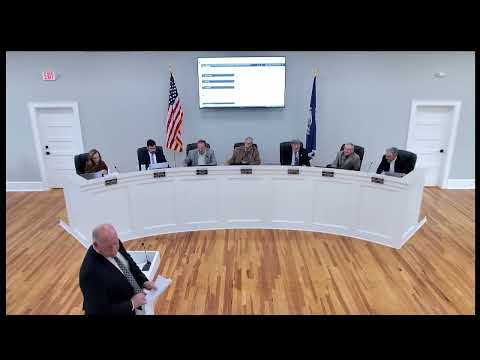
Bay Transit representatives told the Essex County Board of Supervisors that they plan to convert the River Bridge deviated fixed route to an on‑demand microtransit service that would operate within an approximately 10‑square‑mile zone and begin in December if approved.
"I'm David Foles, transit director for Bay Transit," Foles said, describing the system as "more like an Uber or Lyft style ride" that allows riders to schedule same‑day trips by smartphone or by calling a ride line. He said smaller vehicles, no requirement for CDL drivers and more flexible routing contribute to cost and efficiency gains.
Foles said the switch has produced sharp increases in use elsewhere: "In West Point, when we did this, we went from about 80 rides a month to 400 rides a month." He added, "It's about $6,000 less to operate," when comparing microtransit to the prior fixed‑route operation on a per‑vehicle basis.
Board members asked whether county action or budget changes were required. Foles said the town council had already approved the change in August and that Bay Transit sought only to confirm the county had no objections. A board member asked about fares and payment methods; Foles said riders currently pay when boarding but Bay Transit is working to enable app payments and expects the microtransit fare to be $1, compared with $2 under the prior arrangement.
Several board members praised the proposal for improving access to medical appointments, jobs and groceries, and asked Bay Transit to provide follow‑up ridership data. Foles said the agency would keep existing stop structures in place while shifting to door‑to‑door pickup, educate riders about the change and launch media outreach.
No formal county vote was recorded at the meeting; Bay Transit asked the board to confirm it had no opposition and to allow the agency to proceed with implementation planning and community outreach.
Next steps: Bay Transit expects to start the new service in December and will report ridership and operational data back to the board as requested.