Get Full Government Meeting Transcripts, Videos, & Alerts Forever!
Get email alerts on the Opioid Funds topic
No spam. Unsubscribe anytime.
Grant County launches opioid-abatement committee, prioritizes data-driven spending and jail-based interventions
Summary
At its Dec. 15 meeting the Grant County Opioid Fund Committee reviewed its ordinance, reported current fund balances, emphasized evidence-based programs such as drug court, and discussed creating an in-jail assessment or treatment coordinator to connect inmates to services; the committee set a tentative Feb. 17 follow-up.
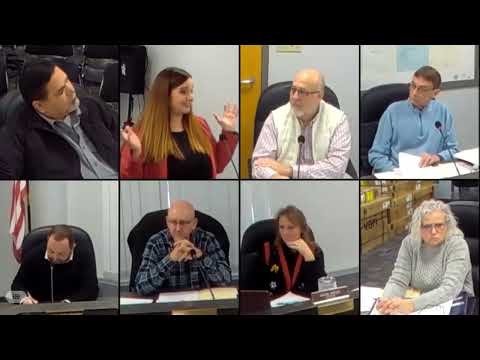
GRANT COUNTY — The newly established Grant County Opioid Fund Committee met Dec. 15 to review its charge under the county ordinance, confirm current fund balances and begin setting priorities for how settlement and other opioid-related monies will be spent.
The committee’s founding duties — described in meeting materials and read into the record — include conducting a local needs assessment using public data (overdose deaths, emergency-department visits), developing a strategic spending plan that prioritizes evidence-based practices, ensuring compliance with Exhibit E of the national opioid settlement and state reporting obligations, and establishing performance metrics and public reporting of outcomes.
Committee members heard a financial update: Speaker 1 reported a restricted opioid fund cash balance of $811,886.59 and an unrestricted cash-and-investments balance of $385,728.68. A preliminary budget line of roughly $135,376 was noted for next-year salaries.
Why it matters
Federal and national opioid settlement funds are arriving unevenly and in installments; counties must balance using funds now with sustaining programs long term. The committee emphasized prioritizing interventions that demonstrably reduce recidivism and overdose risk, and requested detailed local data to shape spending.
Evidence and program examples
A county program evaluator reported a substantial difference in three-year recidivism: graduates of the local drug court had a roughly 10.9% three-year recidivism rate versus about 64% in the comparison group. "So similar to some of the discussions that you guys are starting to have is looking at prioritizing funding," Speaker 5 said, urging the committee to favor programs that show measurable outcomes. Speaker 5 offered to provide the full evaluation and participant counts to the committee.
Jail-based assessment and treatment coordination
Members discussed expanding services inside the jail and immediately after release. "At the Grey County Sheriff's Office, we have — let's say — 380 inmates. Out of 380, we have 150 that ... have addiction issues," Speaker 7 said, arguing for a dedicated in-jail assessment position to determine whether individuals need addiction treatment, mental-health services or both, and to coordinate placements.
Speaker 7 and others described barriers to sending people directly into community treatment programs, including insurance gaps and provider refusals. Committee members discussed funding a treatment coordinator and peer-support roles to speed placements and provide in-house groups that are free to participants. Speaker 5 noted those peer-led in-house programs provided approximately 3,000 additional interventions over the past year.
Next steps and schedule
Speaker 3 volunteered to compile a list of organizations and draft letters seeking information from local partners, including drug court, community corrections and local providers such as Radiant Health and Bowen Center, and to reach out to Hancock County for information about its jail-based programming. The committee tentatively set its next meeting for Feb. 17 to review collected data and draft priorities.
Formal actions
The committee adjourned on a motion and a second; members voted "aye" and the meeting was closed.
What the committee did not decide
No funding awards or final spending decisions were made. Members instructed staff and partners to return detailed program data — enrollment counts, retention and graduation rates, and evaluation reports — to inform the committee’s strategic spending plan at the next meeting.
The committee is charged with producing public reporting on allocations and program outcomes as part of its ordinance-defined duties.