
Scott County council rejects immediate 3% across‑the‑board raises, adopts baseline salary ordinance; schedules department review
Get AI-powered insights, summaries, and transcripts
Subscribe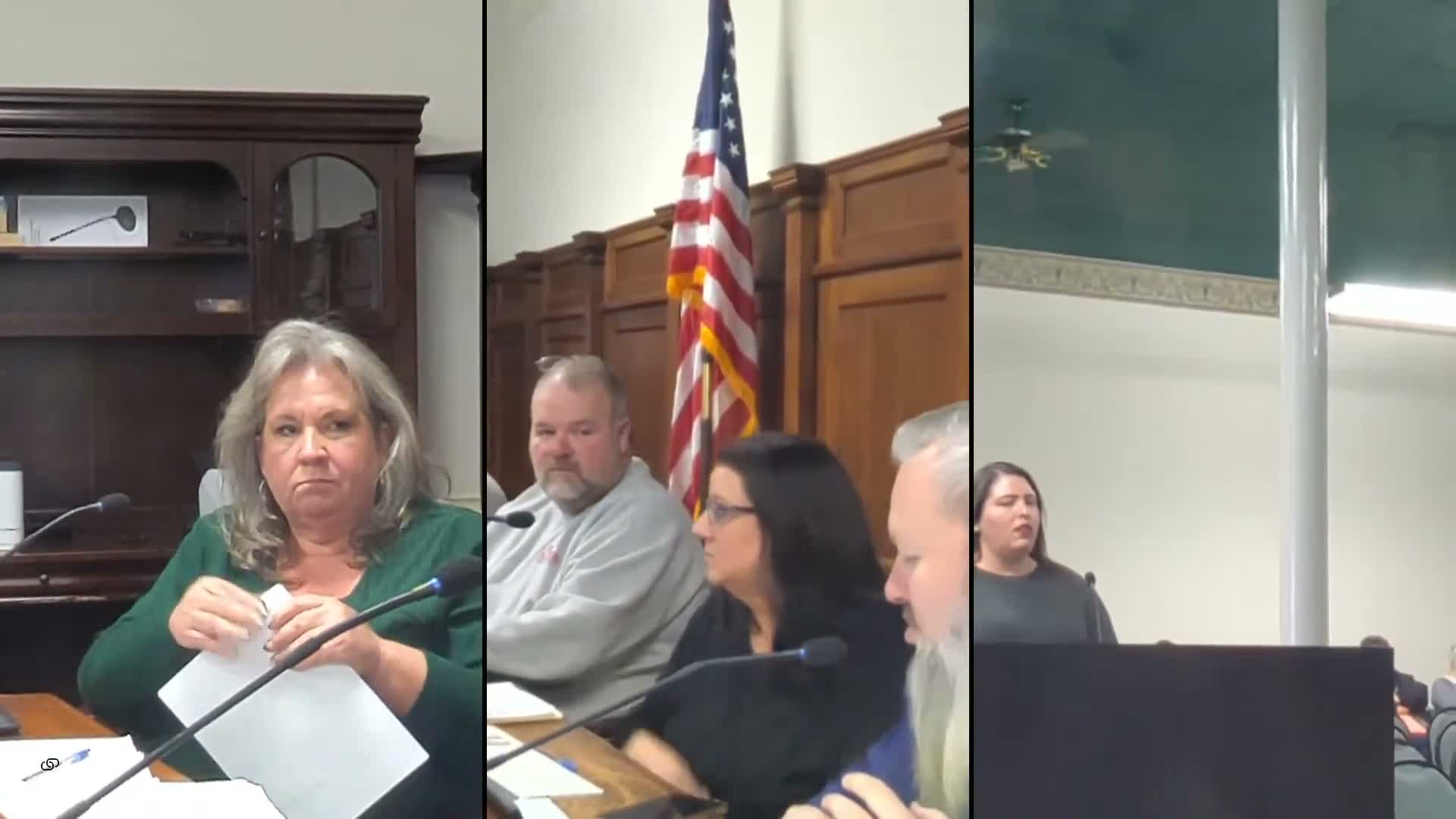
Summary
Council debated a proposed countywide pay increase on Dec. 30 and rejected motions for an immediate 3% across-the-board raise (with and without elected officials). It adopted a baseline 2026 salary ordinance and set a Feb. 1 deadline for department-by-department raise proposals and potential back pay.
Scott County councilors on Dec. 30 considered but declined to approve an immediate 3% pay increase across the board. After extended debate about fairness, fund availability and statutory limits on elected-official pay, the council adopted a baseline 2026 salary ordinance and asked staff to return with a department-level plan by Feb. 1, 2026.
Staff presented cost estimates for a permanent percentage increase: 1.5% roughly $98,533; 2% roughly $131,377; 2.5% roughly $164,002; 3% roughly $197,065. Councilors disagreed about inclusion of elected officials and departments that had received raises in 2025 (for example, EMS and highway staff). An initial motion to grant 3% to all employees, including elected officials, failed after members opposed giving pay increases to elected offices retroactively.
A follow-up motion to grant 3% to county employees but exclude elected officials and EMS also failed. Several councilors said they supported raises for long-overlooked hourly staff, but they wanted a more granular, department-by-department approach rather than a single percentage applied universally. One councilor said the bottom rung of county employees has not had a raise in three years and urged a targeted approach.
The council then approved a standard salary ordinance for 2026 (ordinance 2026-001) as a starting point and separately passed an ordinance addressing elected-official compensation consistent with state statute (ordinance 2026-002) with no change in elected pay. Council members agreed to hold workshops and to produce a historical set of salary ordinances (2021–2025) and a pay-comparative study by HR consultant Shealy Wagner. If councilors approve raises after the Feb. 1 review, staff said any back pay would be issued as a lump sum for January.
What’s next: Auditor and HR staff will compile department-level salary histories, benchmark data and budget impacts for a Feb. 1 council decision. The council set a process-oriented deadline rather than immediately changing compensation.