Get Full Government Meeting Transcripts, Videos, & Alerts Forever!
Get email alerts on the Property Tax topic
No spam. Unsubscribe anytime.
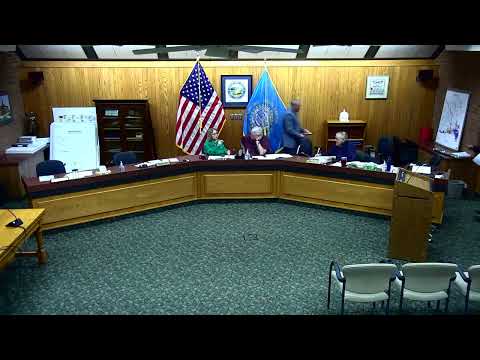
Yankton County commissioners hear legislators’ warnings on tight state revenues and property-tax proposals
Summary
State legislators told Yankton County commissioners on Dec. 16 that weak state revenue and competing mandatory costs will shape the 2026 session; local officials urged targeted relief rather than statewide one-size-fits-all changes. Commissioners said local appeals and budget process engagement remain essential.
State legislators who visited the Yankton County Commission on Dec. 16 told commissioners an austere revenue outlook will constrain policy options in the 2026 legislative session and that property-tax proposals will be front and center.
A legislator who spoke at the evening meeting said South Dakota is facing a period of lower revenue after the COVID-era influx of federal money and that mandatory state spending on education, Medicaid and state employees limits the ability to shift costs without moving the burden to counties. “When you factor in inflation, you’re going down,” the legislator said, describing the challenge of balancing services and taxation across the state.
Commissioners pushed back on broad statewide fixes for property taxes, saying the county’s own data show that local assessments and tax collections have not mirrored the hotspots cited in larger counties. One commissioner said Yankton County’s owner-occupied assessments rose about 37% from 2020 to 2025 while total taxable value rose 36%, but collected taxes increased roughly 13% from 2021–2025 and annual levy changes in Yankton County have been modest. “We worry that a statewide solution aimed at Minnehaha or Lincoln counties could harm smaller counties that do not share the same problem,” the commissioner said.
Lawmakers urged local officials to continue to press for state attention to county mandates—court-appointed attorneys, juvenile placements and other responsibilities that commissioners say drive volatile, hard-to-budget costs. One legislator suggested local sales-tax options and greater local input on revenue tools as possible ways to distribute fiscal responsibility and allow voters to choose local solutions.
Commissioners and legislators also discussed the practical disconnect voters sometimes experience: assessments often rise even when levies decline, producing alarming-looking notices that do not always translate to large tax increases. Several commissioners said residents should be encouraged to engage with their city, county and school boards during budget season and to use available abatement and appeal processes when appropriate.
Why it matters: County officials frame much of their 2026 concern around the interplay between state mandates and local budgets. The conversation underscores a recurring tension in South Dakota policy: statewide proposals to address property-tax pain in fast-growing districts can produce unintended effects for smaller, rural counties that carry different revenue and service profiles.
What’s next: Legislators said the 2026 session will include multiple proposals on property-tax relief and revenue changes; county officials said they will continue to press for clearer state support for county-mandated services and for targeted relief options that distinguish between counties’ circumstances.