Get Full Government Meeting Transcripts, Videos, & Alerts Forever!
Get email alerts on the Parks Capital topic
No spam. Unsubscribe anytime.
Parks officials demonstrate mapping tool and outline $3.2 billion initial investment for park upgrades
Summary
Parks staff demonstrated a new map tool showing 21 "vital" park elements and presented an initial $3.2 billion investment proposal to restore facilities and expand resources in underserved areas; the demo focused on Staten Island access metrics and offered outreach materials for community boards.
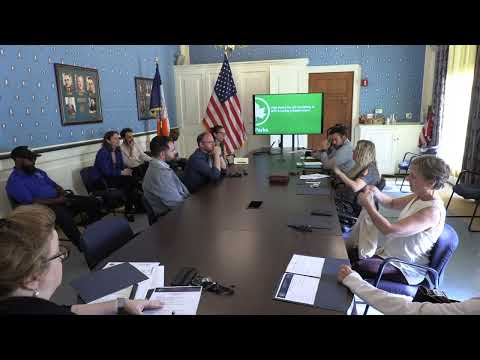
Officials from the parks agency demonstrated a new interactive mapping tool at the Staten Island community board meeting and described an initial investment package intended to support restoration and equity across the park system.
The presenter described a proposed initial investment of "$3,200,000,000" to renovate aging park facilities, add new elements in underserved neighborhoods and support local advocacy and workforce engagement. The tool — presented as a way to visualize "21 elements" such as playgrounds, community gardens, park enforcement patrol coverage, hiking trails and cooling features — allows users to view community-district and citywide comparisons and to toggle future capital projects in the planning pipeline.
Using the tool, presenters showed local access statistics: for example, the presenter reported Community Board 1 at roughly 62% of residents within a 10‑minute walk to a playground in the current view, and noted that toggling future projects changes those numbers. The presenter also explained that some metrics (like hiking trails) are measured by transit access rather than walking distance because they are regional elements.
Parks staff asked community board members to report data errors and said a simplified, one‑page handout and community‑board report are available; they offered to circulate materials and to return for short briefings. The presenter also gave email contact information and invited follow‑up questions so the digital team can correct issues in the tool.
What happens next: parks staff will share outreach materials with boards, accept feedback on data errors, and rely on community input to prioritize capital projects in future funding conversations.