Get Full Government Meeting Transcripts, Videos, & Alerts Forever!
Get email alerts on the Education Policy topic
No spam. Unsubscribe anytime.
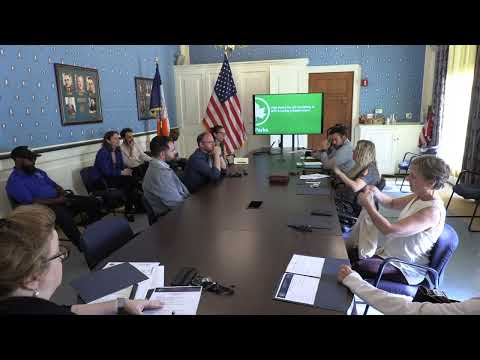
DOE representatives brief Staten Island board on implementing new "bell‑to‑bell" student phone ban
Summary
New York City Public Schools staff told the Staten Island community board they are supporting schools to implement a state "bell‑to‑bell" ban that keeps internet‑enabled devices off and away during the school day, clarified exceptions for medical/IEP needs, and described logistics for collection and claims.
Katie, a representative of the New York City Public Schools Office of Policy and Advocacy, told the Staten Island community board that a recent state law requires schools to implement a so‑called "bell‑to‑bell" ban on internet‑enabled student devices during the school day. "This is a big shift for some of our schools," she said, describing a summer of agency work to help schools prepare.
The DOE presentation emphasized that students may still bring phones to school but must keep them "off and away" during the school day. Katie said schools may choose how to enforce the rule — some will collect devices and store them in lockers or bins, while others may permit students to keep phones on their person in a sealed pouch. "Kids will be able to bring them... they just have to have them off and away during the school day," she said.
The agency explained several specific limits and exceptions. Suspension for possession or use of a phone is not allowed under the policy; disciplinary responses should follow each school's ladder of discipline. Medical and individualized‑education exceptions apply, including examples such as a student who uses a phone app to monitor insulin levels. For family exigencies — for example, when a parent is hospitalized — the DOE said schools may allow a temporary exception so families can reach students.
Board members asked whether the DOE intended to create a single, citywide implementation. Katie said differences across roughly 1,800 schools make a single uniform policy unlikely; the department plans to share templates and best practices so schools can adopt locally appropriate procedures.
On concerns about lost or damaged phones, DOE staff pointed board members to the city's controller's office process for claims and replacement; presenters said the controller had not reported a surge of claims in their recent review. The DOE also said it had provided schools with summer funds to help them buy storage solutions such as pouches, lockers or collection bins.
Officials clarified technical questions: there is no citywide plan to disable school Wi‑Fi to enforce the ban, and school‑issued devices remain usable under the policy. The presenters said internet‑enabled wearables and tablets fall under the ban; passive trackers that cannot access the internet (for example, an AirTag) were described as permissible.
The presentation closed with an invitation for community boards to share on‑the‑ground feedback; DOE staff offered to help troubleshoot implementation at specific schools.
What happens next: the department will continue outreach and provide templates for schools; community boards and parents are encouraged to raise implementation issues with local schools and the DOE's Office of Policy and Advocacy.