District study pins Chestnut Hill as priority; three renovation options total $21M–$28M
Summary
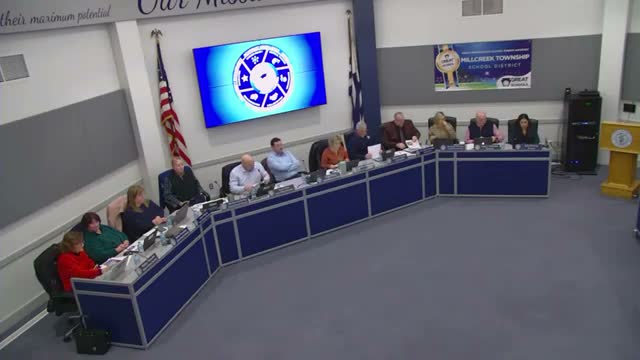
Consultants told the Mill Creek Township School District Nov. 10 that Chestnut Hill Elementary is the most space‑constrained of five elementary schools and presented three conceptual options—ranging from $21.4 million to $27.9 million in all‑in costs—to add classrooms and separate gym/cafeteria functions.
Consultants from HHSDR and MGT told the Mill Creek Township School District on Nov. 10 that Chestnut Hill Elementary is the district’s most over‑utilized elementary building and presented three conceptual approaches to “right‑size” the school, with all‑in cost estimates between about $21.4 million and $27.9 million.
The presentations by John Finn (HHSDR Architects Engineers) and Georgia Leonard (MGT) traced the problem to programmatic demand rather than a district‑wide enrollment surge: Chestnut Hill has three classrooms per grade while most other elementary schools have four or five, art is taught in a shared library space, and cafeterias and gyms are shared in ways that prevent simultaneous lunch and physical‑education periods. "Kudos to the school district. These buildings are in fantastic shape," Finn said, but he added that "space is a premium" and Chestnut Hill in particular needs additional classroom and specialty space.
Why it matters: the consultants said the immediate issue is not an enrollment tsunami but a need for more specialized and classroom space to support growing special‑education programs, intervention services and equitable access to art and music. The district’s capture‑rate and demographic analysis shows broadly stable enrollment, but localized neighborhood gains and four residential projects (20 active units, ~246 in planning) may add students over the next five years.
What was proposed: HHSDR offered three conceptual options. Option 1 would add enough new classrooms to give Chestnut Hill four classrooms per grade and renovate existing finishes and limited MEP systems; estimated all‑in cost: about $21.4 million. Option 2 includes a new gymnasium and cafeteria to permit simultaneous lunch and gym use, converting the old gym to classroom space; estimated all‑in cost: about $27.9 million. Option 3 would add a cafeteria while retaining the existing gym, with an estimated all‑in cost of about $24.7 million. The presenter said new construction work is roughly $475 per square foot in current market conditions.
Board concerns and tradeoffs: board members pressed on program distribution—whether to shift specialized programs instead of adding square footage—and on phasing to keep schools operational during construction. The consultants estimated roughly 12 months for design and 14–15 months for construction, and they said phased work could keep students in the building. Several board members noted that capacity figures understate special‑education needs because those programs operate with much smaller class caps.
Next steps: administration and consultants encouraged further review and stakeholder input; presenters said the figures are conceptual order‑of‑magnitude estimates and that the district could return in January to request design approval if the board wishes to proceed. The board did not vote on a project at this meeting.
Ending note: the facility study frames Chestnut Hill as the district’s top candidate for investment, but the board will have to weigh program relocation, phasing, funding sources and bond timing before deciding whether to pursue a renovation or an addition.