Metro Human Relations Commission adopts tighter financial controls after comptroller report
January 05, 2026 | Human Relations Commission Meetings, Nashville, Davidson County, Tennessee
This article was created by AI summarizing key points discussed. AI makes mistakes, so for full details and context, please refer to the video of the full meeting. Please report any errors so we can fix them. Report an error »
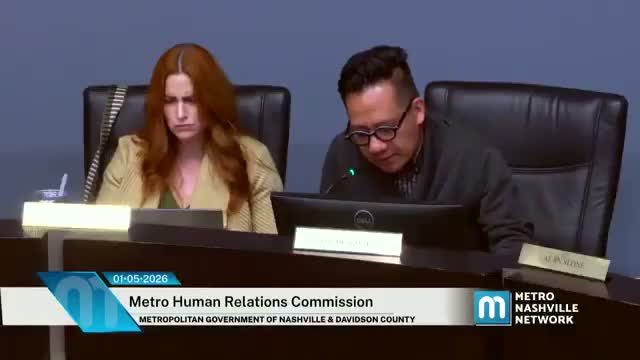
Executive Director Edie Tucker, who introduced the report to the full commission, said the findings showed gaps in oversight and accepted responsibility for those lapses: "I accept all responsibility for the lack of oversight that I have in the finances," she said. The commission endorsed a package of measures recommended by the executive committee designed to reduce risk and increase transparency.
The adopted measures require monthly augmented financial reports that accompany Metro Finance's official statements and include reconciliations, pending invoices and explanatory notes for large deviations; an executive‑committee preview of those reports several days before full commission meetings; a formal flowchart for expenditure approvals and a backup contingency for approvals when the executive director is unavailable; expanded orientation and financial training for staff and incoming commissioners; and a clarified approach to distinguishing procurements from grants or sponsorships.
Metro Legal and Metro Finance staff told commissioners that MHRC lacks independent authority to award grants that transfer funds to nonprofit organizations without Metro Council action. "If it's a grant, it's going to have to go through that separate process that requires Metro Council approval," a Metro Legal representative said. Staff and commissioners agreed the commission can directly procure goods and services (for example, paying for food at an event it cohosts) under procurement rules, while monetary awards to outside organizations often function as grants and require additional steps.
Commissioners pressed for operational clarity and timing. Amanda Deaton Moyer, assistant finance director, said apparent month‑to‑month anomalies in payroll and other lines were often the result of when reports were pulled and when month‑end journal entries were posted, and she recommended allowing at least 45 days for books to close before a report is considered final. The commission amended the executive committee's proposal to require year‑over‑year comparisons in the augmented reports and set a practical limit of no more than 60 days for finalization.
Commissioner 16 moved the main package with two amendments; the motion passed unanimously. The measures do not retroactively change prior votes or grant awards but are intended to create clearer documentation and approval workflows going forward. Chair and staff said Metro Finance will provide an implementation timeline and that the executive committee will preview the augmented report before each full commission meeting.
Next steps include production of the first augmented report for commissioners to review, implementation of the approval flowchart, and staff training and cross‑training so approvals and supplier registration do not bottleneck when key personnel are absent. The commission also said it will bring recommended sponsored organizations before the body for approval prior to disbursing funds.
The Comptroller's report and the commission's adopted package were discussed in an open session; no executive session was recorded. The commission did not specify the exact date for the first augmented report in the meeting transcript.
Don't Miss a Word: See the Full Meeting!
Go beyond summaries. Unlock every video, transcript, and key insight with a Founder Membership.
30-day money-back guarantee
Sponsors
Proudly supported by sponsors who keep Tennessee articles free in 2026

