Get Full Government Meeting Transcripts, Videos, & Alerts Forever!
Get email alerts on the Dilapidation Simpson topic
No spam. Unsubscribe anytime.
Commission denies appeal, upholds dilapidation finding for downtown museum building
Summary
After hearing staff evidence, engineer reports and public testimony, the commission denied Rick Simpson’s appeal regarding 228 East Randolph Avenue 7‑0, upholding the dilapidation determination; commissioners cited structural instability and public‑safety risk near a playground and ordered the standard appeals rights and demolition timeline to proceed.
The Enid City Commission voted unanimously to deny an appeal from Rick Simpson over a dilapidation determination for 228 East Randolph Avenue, an older downtown building that houses museum space and is adjacent to a playground.
Scott, the code officer, presented photographic evidence and a structural engineer’s report that stated the building’s walls are unbraced at multiple levels and “currently unstable and pose a risk of partial or full collapse.” Commissioners asked whether a collapse could reach the nearby playground; staff said it was a possibility given the property’s proximity and the report’s description of an unbraced three‑story wall.
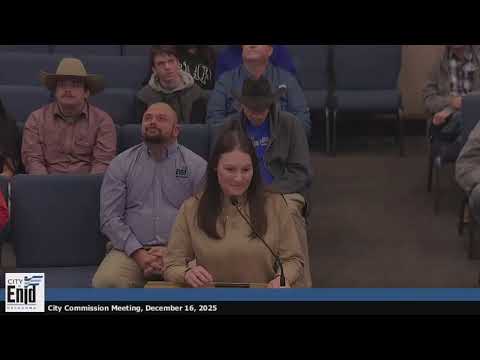
Supporters and contractors who addressed the commission asked for more time and described plans to stabilize the structure. Cole Ream and other community members said they had sought bids and were pursuing options to remove only the worst‑damaged portion, shore the north wall and dry‑in windows and doors. Ream said Simpson had named the city as an additional insured on his liability policy and had obtained a structural engineer report paid for by the owner.
Rick Simpson told the commission crews had already removed a portion of the roof and debris and that contractors were lined up for windows but he had not signed full contracts without secure funding: “Since the last meeting, we took down 10 feet of that roof. We took out 60 yards of debris. We fixed that back garage door,” Simpson said, adding contractors were ready but that grant and foundation funding had slowed work.
Commissioners weighed the risk to public safety, the building’s historic value and the reality that prior deadlines had not been met over multiple years. Some commissioners urged barricading the alley and stabilizing vulnerable sections while owners pursue bids and funding; others emphasized that structural concerns were serious and that the city must follow code and timelines.
After deliberations, a motion to deny the appeal was made and seconded. The commission voted to deny the appeal 7‑0. Staff said denial begins the standard post‑decision timeline (including a 30‑day right to appeal to district court) and outlined steps for asbestos testing, bidding and potential demolition if remediation and repairs are not completed within the allowable process.
The denial upholds the code official’s determination; staff will proceed with the administrative steps the code process requires unless the owner successfully pursues a district‑court appeal.