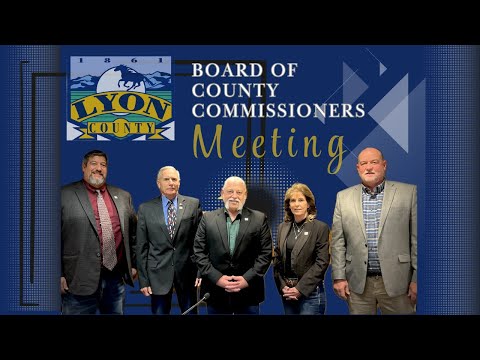
Lyon County commissioners on Jan. 5 continued a decision on a proposed 400-megawatt solar and battery project in Mason Valley after staff told the board key reviews remained incomplete and residents urged more study.
Senior planner Louis Scariola told the board the Winston FC Solar LLC plan would place about 780,000 photovoltaic panels, a battery energy storage system, an electrical substation and supporting infrastructure on roughly 2,374 acres. Staff recommended denial, saying the application sought major reductions from the county's solar setback rules — in places proposing 300-foot setbacks where county code sets a one-half-mile (2,640-foot) standard for arrays near residences or highways — and that Nevada Department of Transportation (NDOT) review of the project's traffic-impact study (TIS) was unresolved.
The project's applicant, represented by Scott Whittemore of Energy Project Solutions and Devin Muda of EDF Power Solutions, said the site is sited to take advantage of existing transmission corridors, has interconnection agreements with NV Energy and would generate construction employment and local revenue. Whittemore said the company has committed, conceptually, about $2,000,000 to intersection improvements at a primary access point and that the applicant has submitted an updated TIS to NDOT and was negotiating scope and comments.
"We are committed to make the improvements," Whittemore said, noting coordination with NDOT and other developers. "We have already made a commitment publicly, $2,000,000," he added in the hearing record.
Residents and stakeholders provided mixed testimony. Opponents, including Matthew Winterhawk, raised safety and traffic concerns on Highway 95 A and nearby roads, questioned the project's compatibility with the rural character of Mason Valley, and warned that reduced setbacks and local siting could set a precedent for future high-impact projects. "I would respectfully urge the board to deny this permit or, at minimum, table it for further study," Winterhawk said during public comment. Other speakers, including some local landowners and Yerington officials, urged approval for the tax revenues and potential jobs the project could bring.
Staff emphasized three core issues underpinning its recommendation: the proposed deviation from the adopted solar setbacks (an approximately 88% reduction in some corridors), outstanding NDOT review and comments on the project's traffic-impact study, and staff doubts about using project components such as a substation as a visual buffer that would otherwise be required to be a natural topographic or structural barrier.
Scariola read county code language into the record noting the board's discretion under the planned unit development (PUD) process but explaining that deviations must be shown to be in the public interest. He told commissioners the county had adopted a renewable-energy chapter in June 2025 establishing the standard setbacks and that staff was not persuaded the applicant had justified an 88% reduction.
Applicant traffic consultants said their 12/19/2025 TIS submission reflected additional NDOT scoping and cumulative-impact intersections NDOT asked to be included, and said NDOT had indicated informal agreement with methodology and that formal comments or approval were expected in the coming weeks. Staff and several commissioners told the board that NDOT's formal review and written comments were essential to evaluate construction-phase impacts (an estimated peak workforce of about 350) and cumulative traffic risks when combined with other nearby projects.
After discussion, a motion to deny the PUD failed for lack of a second. The board then voted to continue or "table" the item with the applicant's concurrence and directed staff to return with NDOT review comments and additional materials addressing the issues discussed. The continuance was made for a maximum of 90 days; the motion passed with one commissioner recorded as voting nay.
What comes next: staff and the applicant will work to secure and present NDOT's review comments, refine traffic and mitigation commitments, and return to the board within the continuance window. The board's action defers a decision while preserving the ability to make the required PUD findings or to deny the application on a later vote.