
Council amends zoning rewrite to require historic commission review and sends duplex-size changes back to first passage
Get AI-powered insights, summaries, and transcripts
Subscribe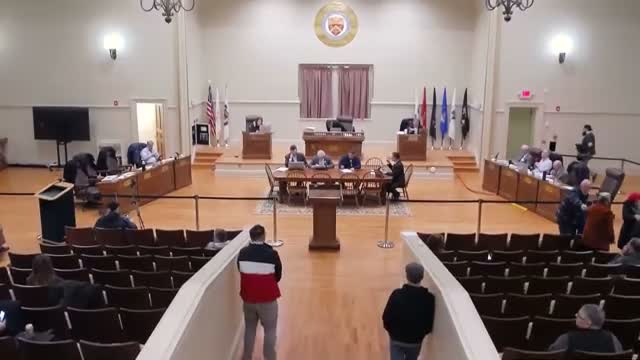
Summary
Council amended a zoning ordinance to require Historic District Commission review for fences and sent an amended duplex-lot-size table back to first passage after debate over whether to increase minimum lot sizes by 25%, 35% or 50%. Planning director favored a 50% increase to preserve neighborhood character.
The council took up PCO 27-25, an ordinance amending the zoning appendix for fence permits, drive-through clearance, and special-use permit minimum lot sizes for duplexes. On committee and again at the council floor, the planning director recommended a 50% increase to minimum lot area for duplex special-use permits to preserve single-family neighborhood character in parts of the city; he said planning-board members preferred the larger increases to guard against piecemeal infill.
Councilman Ricks offered an amendment that would change the wording for historic-district fence reviews from “staff review” to “commission review” and also reduce the duplex minimum-lot increases from the planning board’s recommended 50% to 25% in most districts. The amendment drew extended debate: planning staff and several council members warned that a 25% increase may be insufficient in neighborhoods with large historic lots and that a 35% compromise might be more acceptable.
Public commenters from affected neighborhoods—including Connecticut Point—described strained local infrastructure, limited frontage on undersized lots, doubted the capacity of sewer grinder pumps if density rises, and said repeated variances over time had produced overbuild and parking stress. The planning director said sewer and pump impacts are reviewed case-by-case by sewer staff during permit review and reiterated the planning board’s preference for a 50% minimum.
The council voted to adopt the historic-district wording change (replacing 'staff' with 'commission') and to move the ordinance forward as amended to first passage; because the amendment alters the ordinance language the item reverted to first passage and will return for second passage at a subsequent meeting. Several council members urged further neighborhood-specific review before second passage.
What happens next: The amended ordinance returns to the council for second passage at a later date; the planning director and council members suggested additional outreach and technical checks (stormwater, sewer, and frontage) for neighborhoods where small lots and water-table issues are prominent.