
Forest Hills Board accepts $1.4 million in 31aa safety funding despite concerns over privilege waiver
Get AI-powered insights, summaries, and transcripts
Subscribe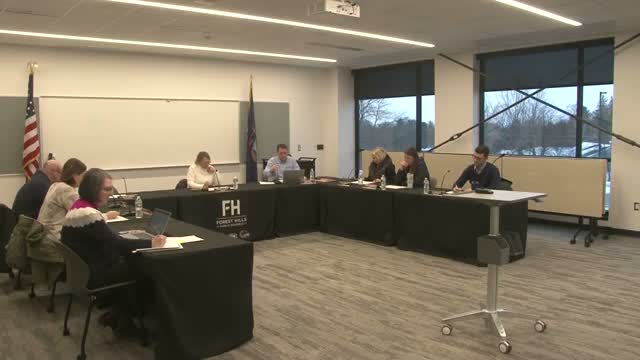
Summary
At its Dec. 30 meeting the Forest Hills Board of Education voted 5–1 to rescind an earlier opt-out and accept at least $1.4 million in 31aa school-safety funds; trustees debated whether the required waiver of certain privileges for future mass-casualty investigations risks chilling legal advice and increasing litigation exposure.
The Forest Hills Board of Education voted 5–1 on Dec. 30 to adopt a resolution opting in to 31aa school-safety funding and to accept a minimum allocation of $1,400,000, after a lengthy debate over whether accepting the money requires the district to waive attorney-client and investigative privileges in the case of a future mass-casualty investigation.
Superintendent Kirby summarized legal developments and the board’s options, telling trustees that the district previously voted to opt out but that the court-of-claims decision and the pending appeal have left important questions unresolved. "We already received the $1,400,000," Superintendent Kirby said, adding that the appeals court could clarify or change the law but that relief allowing opted-out districts to opt back in is not guaranteed.
Trustees focused on two trade-offs: immediate, tangible student- and campus-safety benefits from the funds versus the long-term legal risks of a privilege waiver. Board President (unidentified) warned that the waiver ‘‘could chill having candid conversations with your attorneys’’ and might complicate civil litigation or insurance defenses if district attorney communications become subject to disclosure. Superintendent Kirby countered that governmental immunity still exists and that faster public investigative reports could increase plaintiffs’ access to evidence, potentially increasing litigation risk.
The district’s packet and discussion described how the funds have been used and possible near-term projects. Superintendent Kirby said current 31aa-supported staff include two behavioral coaches, two school nurses, three mental-health liaisons and six MTSS aides at secondary schools; he also listed one-time capital uses the funds could pay for this fiscal year — response cards, door access controls and a visitor management system. The state’s allotment was described in discussion as roughly $148 per pupil as a baseline; the board was told the minimum local allocation in this round is $1,400,000.
Legal and program details that shaped debate: - The court of claims (Judge Patel) clarified that a privilege waiver would apply during a comprehensive investigation following a mass-casualty event; the board was told the judge’s finding is not binding on other courts and the appeals court could interpret the language differently. - The district heard a working definition of a mass-casualty event that, in the court’s clarification, generally involves two or more fatalities or three or more injuries at one time, or incidents that exceed local emergency resources. - The proposed resolution included guardrails: the waiver would be limited to information related to a mass-casualty event, limited in time to the 25–26 state fiscal year (with carryover language), and automatically rescinded if a competent court or the legislature removes the waiver requirement. - Trustees discussed grant-management details, including MDE compliance checkboxes and the risk of ‘‘supplanting’’ (where funds used to pay positions now could not later be shifted back to district general funds without violating grant rules).
After discussion, an unidentified board member moved to adopt a resolution to opt in and accept the funds; an unidentified board member seconded. In roll call the board recorded votes as follows: Dr. Michelle — yes; Mrs. Camotti — yes; Mrs. Ward — no; Mr. Collie — yes; Dr. Faustin — yes; Mrs. Nyingmeier — yes. The motion passed 5–1.
The resolution instructs the district to accept 31aa funds under the stated conditions and reserves the board’s right to challenge or seek modification of any conditions. It also states that if a court or the legislature removes the waiver requirement, the board intends the waiver contained in the resolution to be rescinded without further board action.
Next steps: the board’s decision takes effect subject to any further orders of the appeals court; trustees and district leaders said they will monitor the appeals process and adjust district policy or funding plans if the law or administrative guidance changes.