
Grand Haven consultant outlines 20‑year asset management plan; lead-line work, a $9M Grant Street project top priorities
Get AI-powered insights, summaries, and transcripts
Subscribe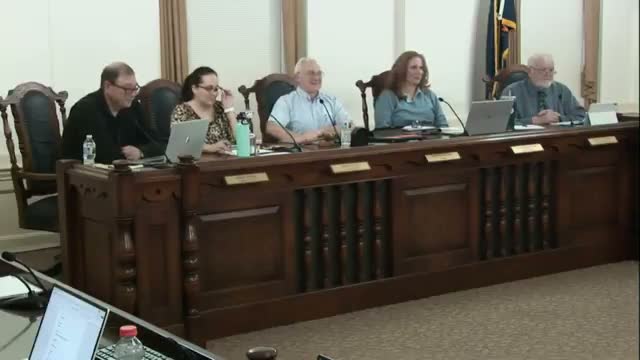
Summary
Consultants told Grand Haven City Council an asset management plan ranks water, sewer and road projects and recommends targeted immediate work on frequent-break areas, lead service-line investigations and three funding paths including state grants and local millage.
Consultants from Adam Marsh Associates presented a 20‑year asset management plan to the Grand Haven City Council on Jan. 5, detailing the city’s inventory and condition of water, sanitary, storm and road assets and recommending a prioritized capital program.
Leah Bechtel, the consultant leading the work, told council the plan covers distribution and collection systems under city roads and excludes treatment plants, city buildings and parks. She said the team compiled system inventories and condition data, then scored assets by likelihood and consequence of failure to map priority projects.
The report lists roughly 80 miles of water main, about 60 miles of sanitary sewer with more than 1,000 manholes and 13 lift stations, over 40 miles of storm sewer and almost 60 miles of roads within the city limits. Bechtel said the water system contains large amounts of cast‑iron pipe installed in the 1920s and 1960s and that the consultant verified service‑line materials in a dashboard posted to the city website.
"You have 4,751 services," Bechtel said, "about 2,800 lines that are copper and plastic, 600 plus are lead confirmed and 1,200 still need to be identified." She added the EPA’s deadline for lead service‑line replacement informed the team’s timeline: "we're getting [lead] out by 2037," she said.
The presentation grouped capital work into three sets. Group 1 included four near‑term priorities: Columbus & Seventh (already in progress), a Seventh Street full utility reconstruction and streetscape (Clinton to Beacon), Grant Street (Beacon to Coburn) — a one‑mile project Bechtel estimated at about $9,000,000 — and Ferry Street (Robins to Granite), where she proposed pipe‑lining to avoid full excavation.
Group 2 focused on lift stations and storage: Bechtel recommended complete rebuilds for three lift stations (named in the presentation) and pump and electrical upgrades at others, and routine coatings/maintenance for two storage tanks at Mulligans Hollow. Group 3 listed additional projects (Colfax, Woodlawn, 4th, Hillcrest, Taylor) with repeated main‑break histories.
Bechtel recommended immediate televising (robotic camera inspection) of sanitary and storm pipes, noting the city currently has televising data for about 25% of the sanitary system and virtually none for storm sewers. She put a price on two data tasks: a contractor televise program estimated at about $3,000,000 and a camera trailer purchase that staff has already acquired for roughly $165,000.
On costs, Bechtel estimated a conservative replacement figure of about $10,000 per lead service line and forecast roughly $10,000,000 would be needed over the next 11 years to replace identified lead lines (this figure excludes main replacements). She said the consultant applied for a $10,000,000 state revolving fund package and expected the city could receive a 50% grant match if awarded.
Council members pressed on timing, break rates and delivery strategy; staff and the consultant said combining related projects could reduce mobilization costs — for example, bidding Columbus and Seventh together to address multiple railroad crossings, with construction pushed into 2027–28 in the current schedule.
Bechtel and staff outlined funding options the plan inventories: Act 51 allocations (used to certify road miles for state funding), an existing infrastructure millage, transportation improvement funds, general fund transfers and water/sanitary revenue. She also noted that certain debt payments taper off between 2028 and 2034, freeing future capacity for capital borrowing.
The consultant closed by listing next steps: finalize and annually update the reports, return a 7th Street design‑fee proposal at the next January meeting, begin prioritized investigations (including service‑line excavations and televising), and pursue grant applications.
The work session concluded after questions from council and staff. The AMP presentation identified immediate priorities and funding paths but left schedule and final funding decisions to future budget processes.