
Board counsel gives mandatory School Ethics Act training; members ask about emails and social media
Get AI-powered insights, summaries, and transcripts
Subscribe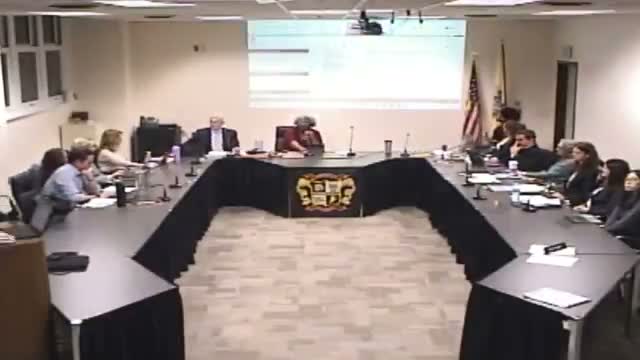
Summary
Paul Green, the board's attorney, reviewed the School Ethics Act and the code of ethics, covering conflicts of interest, complaint procedures, financial disclosures, sanctions, social media guidance and examples from advisory opinions; members asked about replying to emails, CC'ing quorums, and identifying themselves when raising parent concerns.
Paul Green, the board's attorney, led the annual School Ethics Act and board code of ethics training required to be discussed at a regularly scheduled public meeting.
Green summarized the statute and the board code, describing prohibited conduct such as using one's position for unwarranted personal gain, giving direct orders to administration, and engaging in activities that could compromise the board's independence. He explained the distinction between policymaking (the board's role) and administration (the superintendent's role), and said employment actions must follow the superintendent’s recommendation and certain votes require a majority of the full board.
Green reviewed procedural elements: complaints to the School Ethics Commission may be filed by any person except a board of education; there is a six‑month statute of limitations for filing; financial disclosure forms must be filed within 30 days of being sworn in and are approved by the executive county superintendent; and sanctions range from reprimand to censure, suspension, and in severe cases removal from office. He stressed confidentiality for closed‑session discussions and urged care with public statements.
Using past advisory opinions and case examples, Green warned about social media and disclaimers: even with a disclaimer, context can make public statements reasonably appear as board action and can create ethics problems. "Don't put anything in an email that you don't want to see on the front page of the newspaper," Green said when advising members on written communications.
During Q&A, members asked whether they may respond directly to constituent emails, whether they should identify themselves as board members when contacting staff about their own children, and whether CC'ing multiple members risks creating a serial meeting or a de facto quorum. Green advised forwarding constituent emails to the superintendent or president rather than directly responding, recommended including a clear written identification if emailing staff, and cautioned against CC'ing a quorum to avoid inadvertent meetings via email.
Green also discussed advisory opinions and past enforcement examples in which board members were found to have crossed lines by using board email accounts to advocate as private‑party leaders, publicly promoting personal nonprofit projects while using board credentials at conferences, or contacting vendors absent a board directive. He recommended that press statements on behalf of the board come from the board president and that official district matters be handled by the superintendent as the district spokesperson.