
Colleton County audit earns clean opinion as council eyes steps to rebuild shrinking fund balance
Get AI-powered insights, summaries, and transcripts
Subscribe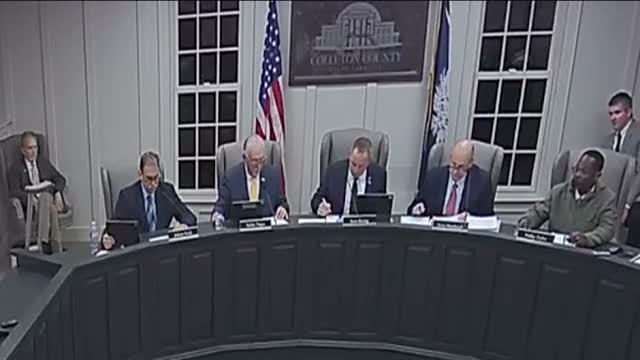
Summary
Independent auditors gave Colleton County an unmodified (clean) opinion on its FY25 financial statements and single audit, but council heard that the general fund balance fell by about $4 million to an unassigned balance near $2.9 million, prompting plans for follow-up budget and finance sessions.
Independent auditors told the Colleton County Council on Jan. 5 that the county’s FY25 financial statements are fairly presented in all material respects, but that the county’s general fund balance has declined and will require attention by the council and staff.
David Erwin, the partner who presented the audit for the county’s external auditors, said the firm is issuing "a clean or unmodified opinion" on both the financial statements and the required single-audit, which applies because federal expenditures for the year exceeded the single-audit threshold. He also said the Yellow Book compliance review found no reportable findings or material weaknesses in internal control.
The auditors’ presentation included key figures: total countywide revenue of about $80.5 million; general fund revenues near $41.9 million and expenditures about $47.5 million; and an unassigned general fund balance of roughly $2.9 million. The auditors noted the general fund’s fund balance decreased by a little over $4 million in FY25 and that the unassigned balance represents about two weeks of operating expenditures, far below the county’s policy target of 20% of operating expenditures and below the Government Finance Officers Association (GFOA) benchmark.
"We are issuing a clean or unmodified opinion on this report," Erwin said during his presentation. He added the single-audit was clean as well and that the audit revealed no significant deficiencies.
Council members pressed for context and next steps. Several council members framed the decline as a cautionary trend rather than immediate distress: one member described the situation as a "yellow light" that warrants attention but said the county is not in financial distress. Council asked staff to schedule budget and finance committee sessions to dig deeper into revenue trends, collection rates and differences between original and final budgets.
The audit presentation identified several causes for the fund-balance decline discussed by council: one-time COVID-related federal funds have been spent, tax increases have been restrained in recent years, and the county’s collection rate slipped below historical averages (the auditors noted a 92% collection rate versus a historical ~95%, a shortfall that could reflect roughly $1.2 million in tax receipts). The auditors also urged the council to review management’s "management discussion and analysis" (MD&A) in the comprehensive annual financial report for additional context.
Next steps: administrators said they will stand up budget/finance sessions in the coming weeks to develop an action plan that the council can use during the FY27 budget process. Council members requested staff provide more detail on budget variances (original vs. final budgets), assess recurring vs. one-time drivers of the decline, and return with potential corrective actions.
What this means: the audit provides assurance that the county’s financial reporting and internal controls met professional standards, but the council must now translate that assurance into policy and budgeting choices that restore the reserve targets the county set for operating flexibility and risk management.