
High court hears argument on post‑conviction testing of knife handles in Cadet case
Get AI-powered insights, summaries, and transcripts
Subscribe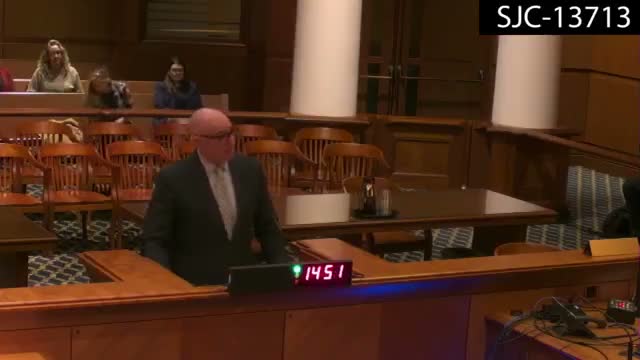
Summary
The Supreme Judicial Court heard arguments over Pierre Paul Cadet’s petition under Chapter 278A seeking post‑conviction forensic testing of handler swabs and other items; defense counsel said such testing could corroborate a self‑defense claim, while the Commonwealth urged denial as testing was available and a strategic choice at trial.
The Supreme Judicial Court heard oral argument in Commonwealth v. Pierre Paul Cadet over whether post‑conviction forensic testing of handler swabs and alleged cleanup materials should be authorized under Chapter 278A.
Merrick Schnipper, appearing for Cadet, told the court that "handler DNA analysis, that showed Bettina Francoise held the knives in question, before the defendant did would support his trial testimony that she initiated their fatal confrontation." He argued the requested testing is material because DNA found on unstained portions of the knife handles could have been deposited before blood transfer and would corroborate Cadet’s account that the victim was the first aggressor.
Schnipper acknowledged gaps in the trial record but said the criminalistics logs and the defendant’s pro se filings show results only for blood swabs and no affirmative results for the handler swabs. "We swabbed the handles for handler DNA, but we never performed those tests," Schnipper said as part of his argument that a threshold showing under section 3 of Chapter 278A has been met and could justify further proceedings, including a section 7 hearing to explore what testing was done and whether modern techniques could yield new, material information.
Several justices pressed the defense on whether handler‑DNA results would reliably show who held a knife first, and whether cumulative trial evidence (flight, prior acts, a note) diminishes the materiality of additional forensic testing. One justice asked, essentially, how proof of touch DNA on a handle "informs whether she held them first;" Schnipper replied that it does not definitively answer the timing question but can support an inference relevant to the jury’s assessment of the Commonwealth’s circumstantial case.
For the Commonwealth, Arnie Hansen argued the petition should be denied because the defendant has not shown materiality and has not shown the items were unavailable for testing before trial. Hansen noted that the murder weapons were entered as exhibits and that blood DNA was identified on the knives; he also described the choice not to pursue handler testing at trial as a strategic decision counsel might reasonably make. "So the testing was certainly available and decision was made not to do it at the time of trial," Hansen said in opposition to the petition.
Hansen further argued that the self‑defense theory is weak on the current trial record: he pointed to the number and pattern of stab wounds and to inconsistent trial testimony, saying these facts undercut the claim that Cadet’s actions were defensive. The attorneys and the court also discussed whether the cleanup‑related testing (for example, of a bleach bottle) raises a separate, permissible avenue for Chapter 278A analysis to test alleged false testimony about scene cleanup.
The lawyers concluded their arguments after extended questioning by the bench; the court did not announce a ruling from the bench during the session. The justices’ questions focused on materiality under Chapter 278A, the availability of testing at trial, counsel’s strategic decisions, and how modern forensic methods might or might not change the evidentiary picture. A decision is expected in due course and will determine whether testing proceeds or the petition is denied.