
Commission appropriates opioid-abatement funds after public comments and eligibility debate
Get AI-powered insights, summaries, and transcripts
Subscribe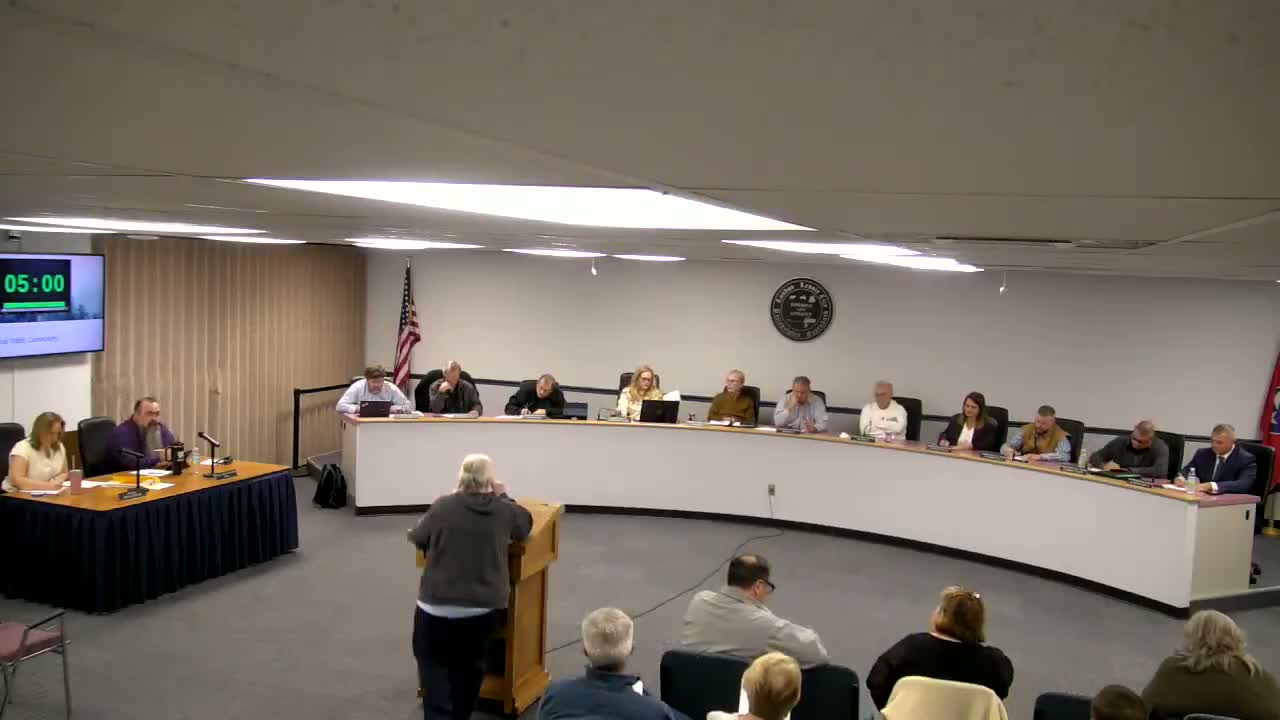
Summary
Following public comment urging broader outreach, commissioners approved allocations from opioid-abatement funds for Beauty for Ashes and the sheriff's jail program and discussed reporting requirements and eligibility tied to the abatement council review.
Members of the public and commissioners spent significant time Jan. 5 debating how Loudon County should allocate opioid-abatement settlement funds before the commission approved a set of appropriations.
During public comment, Pat Hunter of the 5th District asked the county to publish notice inviting agencies — including the Boys & Girls Club — to apply for outreach funding, saying she believed the Boys & Girls Club had submitted a plan. County staff described the process: recipients submit a plan and budget template that the county forwards to the abatement council and to a UT "Smart Initiative" review team, which advises whether proposed uses meet the abatement council's approved categories. "What they do is they submit a report to show how they are planning to use the money," staff said, adding the county requests a follow-up report after funds are spent.
Staff told commissioners the county's balance from earlier disbursements was "a little more than $1,200,000" as of Dec. 15. Commissioners questioned whether the Boys & Girls Club or other local groups had applied and whether the county should see itemized plans before releasing funds. One commissioner asked whether Greene County's prior actions suggested a cautionary example; staff said Greene County had recorded reimbursements against eligible criteria but that the abatement council ultimately controls qualification.
The commission moved to appropriate funds to Beauty for Ashes and the sheriff's jail program and approved the motion by roll call. Staff and commissioners emphasized that funds would only be distributed if the abatement council (via UT review) verifies the proposed expenditures meet settlement rules. Several commissioners asked staff to obtain follow-up reports showing how recipients spent the first tranche of funds before further appropriations.
The commission recorded the roll-call votes and the motion carried. Commissioners agreed to request reports from Beauty for Ashes, the Boys & Girls Club and the sheriff's department on previously appropriated monies by the end of the fiscal year.
Next steps: staff will seek the UT review on new requests and return follow-up reports on how earlier appropriations were spent before approving additional distributions.